

20 Best Welsh Rarebit Recipe: Easy Traditional British Cheese Toast
Have you ever bitten into something so simple yet so incredibly satisfying that you just stopped and thought why haven’t I made this sooner? That’s exactly what Welsh Rarebit does to people. It looks humble. It sounds almost too easy. But one bite of that bubbling, golden, sharply seasoned cheese sauce on thick, crunchy toast and you’ll completely understand why this dish has survived centuries of culinary trends without changing much at all.
Here’s the thing: Welsh Rarebit isn’t just cheese on toast. Not even close. It’s a proper, cooked rarebit sauce recipe built on a butter-flour roux, dark ale, bold mustard, and a generous splash of Worcestershire sauce, all working together to create something far greater than the sum of its parts. It’s classic British comfort food at its absolute finest. Rich. Punchy. Deeply savory. And surprisingly quick to pull off on a weeknight.
This guide covers everything you need the traditional Welsh rarebit recipe, the best cheese and beer to use, step-by-step instructions, clever variations, make-ahead tips, and the secrets that separate a good rarebit from a truly unforgettable one. Whether you’re cooking for a lazy Sunday brunch or need a quick comfort meal that genuinely impresses, this is the recipe you’ve been looking for.
How to Make Welsh Rarebit
How to make Welsh rarebit is one of those questions that sounds complicated but really isn’t. The process is straightforward: build a rich, beer-based cheese sauce on the stovetop, pour it over thick-cut toast, then slide it under a hot broiler until it’s golden, bubbling, and irresistible. Think of it as the bold, sophisticated British cousin of American mac and cheese sauce — but built for toast and ready in under 20 minutes.
The magic here is in the method. You’re not just melting cheese on bread. You’re making a proper sauce one that clings to the toast, seasons every bite evenly, and develops a gorgeous caramelized top under the broiler heat. Once you understand that distinction, the whole dish clicks into place. Most home cooks are genuinely surprised by how approachable this classic Welsh dish turns out to be on their very first attempt.
Traditional Welsh Rarebit Ingredients
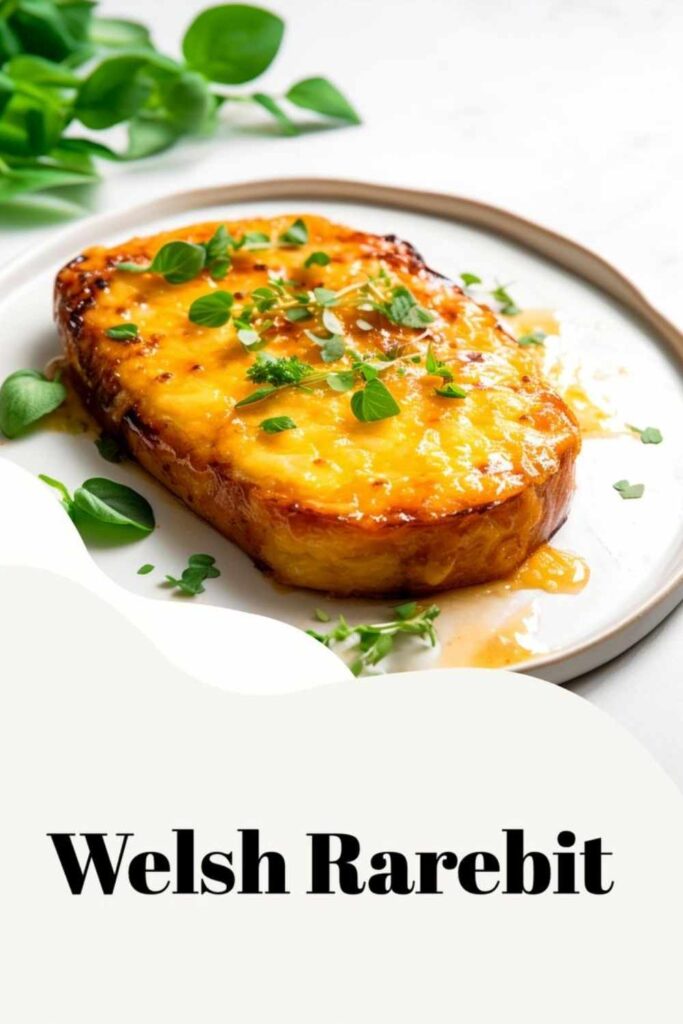
The ingredient list for an authentic Welsh rarebit is short, honest, and packed with flavor. Every single item on this list earns its place. Sharp aged cheddar is the backbone it needs to be freshly grated, never from a pre-shredded bag. Butter and flour create the roux that holds the sauce together. Dark ale or stout gives it malty depth. Worcestershire sauce adds umami. English mustard brings heat. Thick-cut bread provides the sturdy base everything sits on.
What makes this a winning savory toast recipe for an American kitchen is how accessible these ingredients are. You’ll find everything at any Kroger, Whole Foods, or Walmart without searching specialty import stores. Quality matters here though especially with the cheese and beer. Cheap ingredients produce flat, disappointing results. Invest a little in good sharp cheddar and a decent dark ale and the dish rewards you generously.
| Ingredient | Amount | Notes |
| Sharp cheddar (freshly grated) | 2 cups | Never pre-shredded |
| Unsalted butter | 2 tbsp | For the roux |
| All-purpose flour | 2 tbsp | Creates smooth base |
| Dark ale or stout | ½ cup | Room temperature |
| Worcestershire sauce | 1 tsp | Lee & Perrins recommended |
| English mustard | 1 tsp | Dry or prepared |
| Salt and black pepper | To taste | Season boldly |
| Thick-cut bread | 4 slices | Sourdough or white bloomer |
Best Cheese for Welsh Rarebit
The best cheese for Welsh rarebit is aged cheddar specifically a sharp, robust variety with real bite and excellent melting properties. Aged Welsh cheddar is the traditional choice, and for good reason. It’s tangy, grassy, and almost irreplaceable in flavor. But in the US, a good Vermont sharp cheddar or Cabot Seriously Sharp comes remarkably close and works beautifully in this cheddar rarebit recipe. Whatever you choose, grate it fresh yourself. Pre-shredded bags contain anti-caking agents that prevent smooth melting and leave your sauce grainy and unpleasant.
Some cooks like to blend two cheeses for extra complexity. A sharp cheddar base with a little Gruyère stirred in adds nuttiness without overwhelming the classic flavor profile. For bold eaters, a small amount of blue cheese crumbled into the mix is surprisingly good punchy and interesting. But start with a pure sharp cheddar base on your first attempt. Nail the foundation before experimenting with the variations.
| Cheese | Flavor Profile | Verdict |
| Aged Welsh cheddar | Sharp, grassy, tangy | Best choice traditional |
| Vermont sharp cheddar | Bold, slightly earthy | Excellent US substitute |
| Cabot Seriously Sharp | Punchy, clean | Widely available, great choice |
| Gruyère | Nutty, smooth | Blend only — not solo |
| Pre-shredded cheddar | Flat, grainy when melted | Avoid entirely |
Best Beer for Welsh Rarebit
Welsh rarebit with beer is where the real soul of this dish lives. The right beer doesn’t just add liquid it adds malty, slightly bitter complexity that makes the sauce taste genuinely layered and interesting. Dark ales and stouts are the traditional picks for good reason. Guinness works brilliantly and is available everywhere across the US. Newcastle Brown Ale brings a sweeter, nuttier note. Samuel Smith’s Nut Brown Ale is more complex and worth seeking out at specialty stores. The bitterness of a good dark beer balances the richness of the melted cheese in a way that nothing else quite replicates; this is what separates stout beer cheese toast from everything else.
American craft beer lovers have a genuine advantage here. A robust porter or a dark craft stout from your local brewery often works just as well as or better than mass-market imports. The one rule: avoid light lagers and heavily hopped IPAs. Lagers are too thin and contribute almost nothing to the flavor. IPAs bring a bitterness that clashes aggressively with aged cheddar. Stick to dark, malty, and smooth and always use room-temperature beer, which blends into the warm sauce far more smoothly than cold.
| Beer Type | Flavor Contribution | US Brand Example |
| Guinness Stout | Rich, roasty, smooth | Nationwide availability |
| Newcastle Brown Ale | Malty, slightly sweet | Most grocery stores |
| Samuel Smith Nut Brown | Nutty, complex | Specialty/liquor stores |
| Local dark craft stout | Varies usually excellent | Your local brewery |
| Amber ale | Mildly malty, lighter body | Sierra Nevada, Allagash |
| Light lager | Watery, flavorless | Avoid |
| IPA | Clashing bitterness | Avoid |
Welsh Rarebit Without Beer
Not everyone wants alcohol in their food and that’s absolutely fine. Welsh rarebit without beer is genuinely achievable and still deeply satisfying. The most effective substitute is whole milk or heavy cream, which keeps the sauce rich and luscious without adding bitterness. For a little more depth, try vegetable broth with a small splash of apple cider vinegar to mimic the slight tang that beer naturally provides. Non-alcoholic dark beer is also a solid option it preserves the flavor profile almost entirely and is the easiest one-to-one swap you can make.
The key with a beer-free Welsh rarebit is to season more boldly than the original recipe calls for. Without beer’s built-in complexity, the sauce needs your full seasoning attention. Lean harder on the Worcestershire sauce, mustard, and black pepper. Taste as you go. Don’t be timid. A non-alcoholic version of this easy savory breakfast or lunch can be every bit as satisfying as the original it just requires a little more deliberate seasoning to get there.
Easy Welsh Rarebit Recipe (Step-by-Step)
Here’s the full, foolproof easy Welsh rarebit recipe broken into three clear steps that anyone can follow. This is a quick lunch recipe that delivers serious flavor without any complicated technique. From first ingredient to finished plate, you’re looking at 20 minutes flat. Everything you need is right here.
Quick Recipe Overview:
| Detail | Info |
| Prep Time | 5 minutes |
| Cook Time | 12–15 minutes |
| Servings | 4 |
| Difficulty | Easy |
| Best For | Lunch, brunch, light dinner |
Step 1 – Make the Cheese Sauce
Start by melting butter in a medium saucepan over medium heat. Once it’s fully melted and just starting to foam, whisk in the flour and stir constantly for a full 60 seconds. This roux is the foundation of your creamy cheese topping don’t rush it, and don’t skip the cooking time. A raw roux makes the sauce taste starchy and dull. After that minute, slowly pour in the room-temperature dark ale, whisking continuously as you go. Take your time here. Add the beer in a thin, steady stream rather than all at once. Rushing this step causes lumps that are difficult to smooth out later.
Once the beer is fully incorporated and the sauce is smooth and beginning to thicken, reduce the heat to low. Stir in the Worcestershire sauce, English mustard, salt, and a generous grind of black pepper. These aren’t optional seasoning notes they’re central to what makes this a proper rarebit with Worcestershire sauce rather than just plain melted cheese.
Now add the freshly grated sharp cheddar in small handfuls, stirring between each addition and letting each batch melt fully before adding the next. Never dump all the cheese in at once. Patience here is the single biggest factor in whether your sauce turns out silky and glossy or grainy and broken. The finished sauce should be thick, smooth, and coat the back of a spoon cleanly.
Step 2 – Toast the Bread
While the sauce rests off the heat, prepare the bread. The best bread for Welsh rarebit is thick-cut sourdough or a sturdy white bloomer something with real structure that can support a generous layer of heavy, rich sauce without going limp and soggy underneath.
Toast each slice to a deep, confident golden brown. Not lightly golden. Not pale blonde. A proper, dark golden toast that’s crisp all the way through. That textural contrast crunchy toast underneath, molten bubbling sauce on top is what makes every bite of grilled cheese toast recipe so satisfying.
Arrange the toasted slices on a broiler-safe baking sheet lined with aluminum foil. The foil is a small but genuinely helpful detail it makes cleanup dramatically easier and ensures even heat reflection from below. Make sure your broiler is already preheated to high before the pan goes anywhere near it. A fully preheated broiler means fast, even browning rather than a slow, uneven melt that can dry the surface of the sauce out before it properly caramelizes.
Step 3 – Grill Until Golden
Spoon the cheese sauce generously over each slice of toast. Don’t be shy cover the bread edge to edge, right to the crust. This is not the moment for restraint. Slide the tray under the preheated broiler and watch it closely. In just 2 to 4 minutes, the sauce will puff up slightly, begin bubbling vigorously across the surface, and develop gorgeous dark golden spots and patches on top. That’s exactly the result you’re after.
The moment it looks irresistible, pull it out. Don’t walk away. Don’t check your phone. Baked cheese toast under a high broiler goes from perfect to overdone in under a minute. Serve immediately, while the sauce is still hot, molten, and gloriously bubbling.
Secrets to the Best Welsh Rarebit
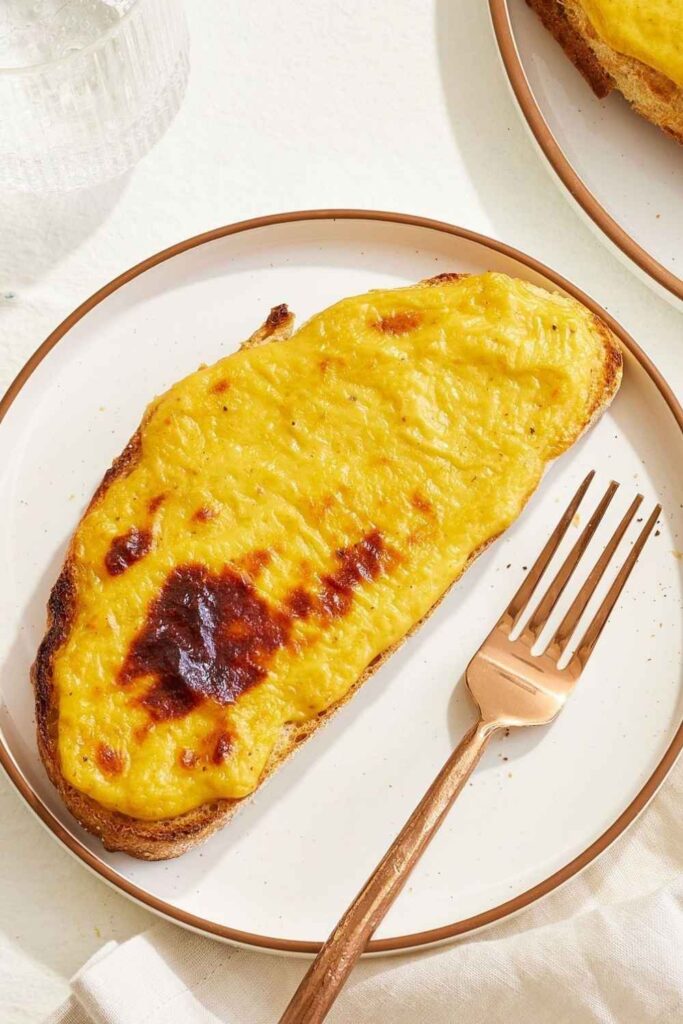
The best Welsh rarebit comes down to a handful of small decisions that add up to a big difference on the plate. Grate your cheese fresh every single time. Use room-temperature beer so it blends seamlessly into the warm sauce without causing temperature shock. Build your roux patiently and let it cook for a full minute before adding any liquid. Season the sauce boldly with both mustard and Worcestershire these are front-and-center flavor drivers, not background notes. Toast the bread properly before adding the sauce. A properly toasted base is non-negotiable for texture.
One underrated secret that most recipes skip entirely: let the finished sauce rest off the heat for two full minutes before you spoon it onto the toast. It thickens slightly during that rest, becoming easier to spread in a thick, even layer that won’t run off the edges. Also preheat your broiler fully before the pan goes in.
A half-heated broiler creates slow, uneven browning that dries the sauce surface before the interior even gets warm. Full heat, fast broiling, and perfect results. These are the details that make a homemade Welsh rarebit taste like something from a proper British gastropub.
Read More About: Prom Nails 2026: The Ultimate Guide to Stunning Fingertips on Your Most Glamorous Night
Common Mistakes That Make Rarebit Grainy
Grainy cheese sauce is the most common complaint people have when making this dish and it’s almost always caused by one of the same handful of mistakes. Understanding what causes the problem makes it completely avoidable. The biggest culprit is pre-shredded cheese.
Those bags contain anti-caking agents that actively interfere with smooth melting and consistently produce a grainy, unpleasant texture. The second most common mistake is adding cheese to a sauce that’s too hot high heat breaks the fat-protein emulsion in the cheese and causes the solids to seize up into clumps. Always add cheese over the lowest possible heat setting.
Dumping all the cheese into the sauce at once overwhelms the liquid and causes immediate clumping. Cold beer added to a warm roux causes temperature shock that tightens the sauce. Skipping the roux entirely just adding cheese to milk or beer removes the binding agent that holds everything together.
Every one of these mistakes is easy to avoid once you know what to look for. Follow the method carefully, use freshly grated cheese, keep the heat low during the cheese addition, and you’ll get a perfectly smooth creamy cheese topping every single time.
How to Keep the Cheese Sauce Smooth
Smooth cheese sauce is entirely about heat control and patience. Once you add the cheese to the sauce, drop the temperature to the lowest setting your stove offers and stir continuously in a slow, deliberate figure-eight motion. Add the cheese in small, manageable handfuls — roughly a quarter cup at a time letting each addition melt completely before reaching for the next.
If the sauce ever starts to look like it might be separating if you see greasiness beginning to pool around the edges pull the pan off the heat immediately and stir vigorously. A small squeeze of fresh lemon juice can help re-emulsify a sauce that’s starting to break, because the acid helps stabilize the proteins. These attentive, deliberate steps are the entire difference between a glossy, professional-looking rarebit sauce recipe and a greasy, grainy disappointment.
The Ideal Cheese-to-Beer Ratio
Getting the cheese-to-beer ratio right is fundamental to this dish. The sweet spot for a classic traditional Welsh rarebit is roughly four parts cheese to one part beer by volume. For a four-serving batch, that means two cups of freshly grated cheddar to half a cup of dark ale. Too much beer produces a thin, runny sauce that slides right off the toast and pools on the plate.
Too little makes the sauce stiff, heavy, and difficult to spread evenly. The perfectly balanced sauce flows like warm caramel fluid enough to spoon generously but substantial enough to sit on the toast without running. It should coat the back of a spoon cleanly and hold that coating without dripping immediately.
Welsh Rarebit Variations
Once you’ve nailed the classic traditional Welsh rarebit recipe, the variations open up a genuinely exciting world of possibilities. Each one builds on the same reliable foundation the beer-based roux sauce, the sharp cheddar, the boldly seasoned base and adds one or two new elements that completely change the character of the dish. Some of these have become favorites in their own right, and a few have started appearing on trendy gastropub menus across the US.
Welsh Rarebit With Bacon
Crispy streaky bacon tucked between the toasted bread and the cheese sauce is one of the most satisfying things you can do with this dish. The saltiness of the bacon cuts directly through the richness of the melted cheese, and the crunch it adds creates an incredible textural layer that the classic version doesn’t have. Cook the bacon until genuinely, audibly crispy not floppy or chewy. Lay strips directly on the toast before spooning the sauce over the top. Under the broiler, the bacon and cheese fuse together into something deeply, unapologetically indulgent. This variation bridges the gap between British comfort food and a classic American brunch plate beautifully.
Welsh Rarebit With Leeks
Welsh rarebit with leeks is the more traditional, countryside version of this dish and it’s deeply satisfying in a completely different way from the bacon version. Leeks and aged cheddar are a famously Welsh flavor combination. Gently sauté sliced leeks in butter over medium-low heat until they’re completely soft, slightly translucent, and just beginning to caramelize at the edges.
Then layer them on the toast before adding the cheese sauce. The natural sweetness of the cooked leeks plays beautifully against the sharpness of the cheddar rarebit sauce, creating a balance that’s earthy, warming, and genuinely complex. This is also an excellent vegetarian variation that doesn’t feel like a compromise in any sense.
Welsh Rarebit With Nduja
This one is for the spice lovers and it’s genuinely one of the most exciting variations on the list. Nduja is a spreadable, fiery Calabrian salumi from southern Italy, loaded with pork fat and hot chilies. Stir one or two tablespoons directly into the finished cheese sauce before spooning it onto the toast. The nduja melts into the sauce almost invisibly, leaving behind layers of smoky heat, pork richness, and chili warmth that are absolutely addictive. It also turns the sauce a gorgeous deep reddish-orange color. Find nduja at Italian delis, Whole Foods, or easily online. This particular variation has been turning up on gastropub menus across both the US and UK with good reason.
Vegan Welsh Rarebit
A genuinely good vegan Welsh rarebit is absolutely achievable and far more satisfying than you might expect. Swap the sharp cheddar for a high-quality vegan aged cheddar. Violife Mature Cheddar and Miyoko’s Creamery both melt reasonably well and carry enough flavor to work in the sauce. Use plant-based butter and unsweetened oat milk instead of dairy.
Replace the beer with a vegan-certified dark ale most stouts are vegan-friendly, but always check the label since some use isinglass fining agents. Add two tablespoons of nutritional yeast to the sauce to boost the savory, cheesy depth that vegan cheese sometimes lacks on its own. The result won’t be byte-for-byte identical to the classic, but it’s rich, warming, and genuinely crave-worthy.
Welsh Rarebit Muffins
Swap the large bread slices for split English muffins and you’ve created something entirely different and equally excellent. The nooks and crannies of the muffin catch the cheese sauce in the most satisfying way, creating little pockets of molten, seasoned cheese in every single bite.
Welsh rarebit muffins are ideal for brunch smaller, neater, easier to serve to a group, and fun to eat. Top each muffin half with sauce, run them under the broiler, and serve with a perfectly fried or poached egg resting on top for an easy savory breakfast that looks and tastes genuinely impressive. Halved and quartered, these also make excellent party appetizers.
What to Serve With Welsh Rarebit
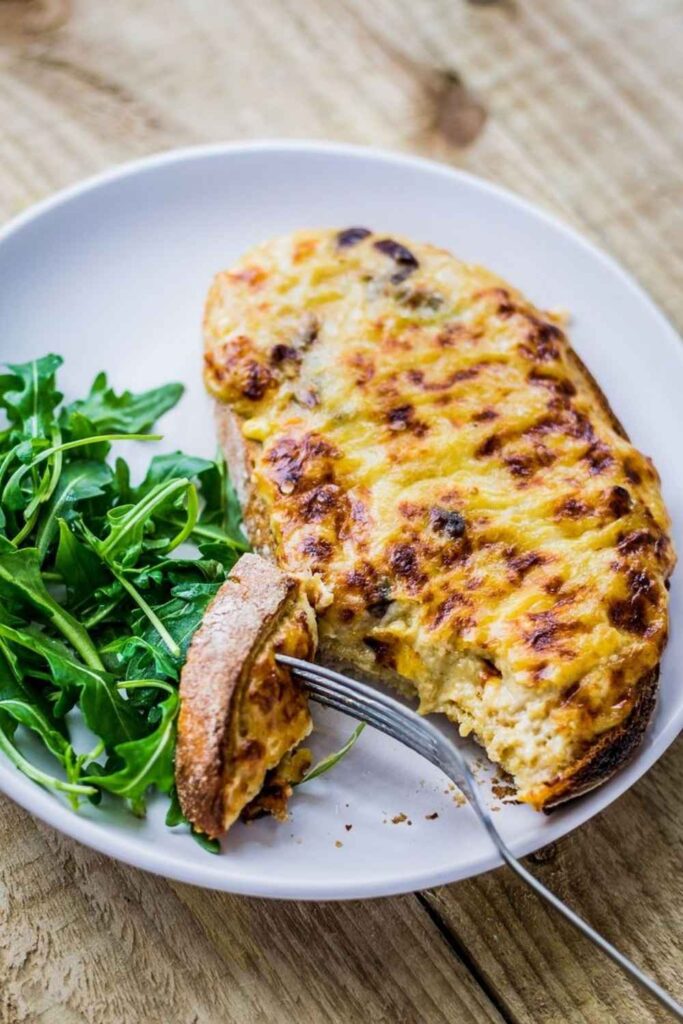
Welsh Rarebit is rich, bold, and deeply savory. The best accompaniments balance rather than compete something acidic, bright, or lightly bitter to cut through the richness of the cheese sauce and reset the palate between bites. Think about contrast above all else when planning what to serve alongside this classic British comfort food.
Best Side Dishes for Rarebit
A simple green salad dressed with a sharp mustard vinaigrette is the single most classic companion the acidity slices cleanly through the richness of the cheese and creates a refreshing counterpoint to every warm, heavy bite of toast. Pickled onions work brilliantly for the same acidic reason and are a deeply traditional British accompaniment.
Roasted cherry tomatoes halved and blistered in the oven with good olive oil, sea salt, and fresh thyme add brightness, color, and a little sweetness to the plate. For heartier appetites, a fried or poached egg placed directly on top of the cheese toast transforms Welsh Rarebit into a dish known as Buck Rarebit, which is a British pub classic in its own right. Sliced avocado also works surprisingly well for an American twist on the plate.
Soup and Salad Pairings
Welsh Rarebit alongside a bowl of good tomato soup is one of the great simple pleasures of British comfort cooking. The way the cheese toast dunks into silky, slightly sweet tomato broth is almost unfairly good deeply satisfying and completely unpretentious.
Leek and potato soup leans into the Welsh theme beautifully and turns the whole meal into a proper celebration of traditional Welsh ingredients. For salads, keep the dressing light and acidic: a watercress and apple salad dressed with apple cider vinegar and a thin drizzle of honey hits every note you need alongside a rich cheesy toast recipe. Avoid creamy, heavy dressings they tip the whole plate into overwhelming richness. Bright, fresh, and acidic is always the right call here.
Welsh Rarebit vs Cheese on Toast
What is Welsh rarebit versus plain cheese on toast recipe? People ask this constantly and it’s a completely fair question. They look similar sitting on the plate. But they’re fundamentally different dishes built on different ideas and different techniques.
Cheese on toast is exactly what it sounds like: cheese sliced or grated placed on bread and melted under a grill. Fast. Simple. Decent. There’s no sauce, no seasoning beyond perhaps a pinch of salt, and no real method beyond basic assembly. It takes about five minutes and produces a perfectly adequate quick snack.
Welsh Rarebit is something else entirely. It’s a proper cooked sauce a butter-flour roux enriched with dark ale, sharpened with English mustard and Worcestershire sauce, and finished with generous handfuls of sharp aged cheddar. The sauce is seasoned carefully, built deliberately, and broiled until it develops those distinctive golden caramelized spots on top. The difference in flavor between the two is significant and immediate. It’s the difference between instant coffee and a properly pulled espresso. One satisfies in a functional way. The other genuinely delights you.
Read More About: Prom Hairstyles 2026: The Ultimate Guide to Looking Absolutely Stunning on Your Big Night
Key Differences in Flavor and Technique
| Feature | Welsh Rarebit | Cheese on Toast |
| Sauce | Beer-based roux sauce, fully cooked | None just cheese placed on bread |
| Flavor complexity | Rich, layered, tangy, boldly seasoned | Mild, simple, one-dimensional |
| Main ingredients | Cheddar, beer, mustard, Worcestershire | Cheese, bread |
| Technique | Stovetop cooking plus broiling | Broiling only |
| Total time | 15–20 minutes | 5 minutes |
| Best occasion | Impressive comfort meal, brunch, lunch | Quick snack |
| Textural result | Sauce puffs and caramelizes under broiler | Cheese melts flat |
Can You Make Welsh Rarebit Ahead of Time?
Great news for home entertainers and meal preppers: yes, absolutely. The cheese sauce can be made up to three full days ahead of time and stored in an airtight container in the refrigerator. Some cooks genuinely argue the sauce improves overnight as the flavors meld, deepen, and become more integrated the mustard mellows slightly, the Worcestershire sinks in, and the whole sauce tastes more cohesive.
When you’re ready to use it, reheat gently over low heat, stirring constantly. Add a small splash of whole milk or dark beer as you reheat if the sauce has thickened significantly in the fridge which it will. Don’t rush the reheating with high heat. That’s precisely how a smooth sauce turns grainy and broken.
The toast itself should always be made fresh. Pre-toasting bread hours ahead and letting it sit leads to stale, softened results that won’t hold up structurally under the heavy sauce. The winning approach for family lunch ideas and easy entertaining is to prepare the sauce one to three days ahead, reheat it gently while you toast fresh bread, then assemble and broil right before serving. Two minutes of final prep delivers a dish that tastes completely fresh and made from scratch.
How to Store and Reheat Leftovers
| Storage Method | Duration | Reheating Instructions |
| Refrigerator (sauce only) | Up to 3 days | Low heat, constant stirring, add a splash of milk |
| Freezer (sauce only) | Up to 1 month | Thaw overnight in fridge, reheat gently on stovetop |
| Assembled toast in fridge | Not recommended | Bread goes soggy store sauce separately |
| Assembled toast in freezer | Not recommended | Texture breakdown — avoid entirely |
Always thaw frozen sauce completely in the refrigerator overnight before reheating never rush it from frozen to stovetop directly. And never microwave Welsh Rarebit cheese sauce. The uneven, rapid heat from a microwave consistently destroys the emulsion and leaves you with a separated, greasy mess that can’t be fixed. Low heat, constant stirring, and a small splash of liquid that’s the only reheating method worth using.
Nutrition Information
Welsh Rarebit is a rich, indulgent dish and it’s honest about that fact. It’s not a diet food, and it doesn’t pretend to be. But it is genuinely satisfying in small portions, it’s a good source of both protein and calcium, and it’s far more nutritionally complete than a plain bag of chips when the afternoon snack craving hits. The values below are approximate, based on a four-serving batch using the classic recipe.
| Nutrient | Per Serving (approx.) |
| Calories | ~420 kcal |
| Protein | 18g |
| Total Fat | 26g |
| Saturated Fat | 15g |
| Carbohydrates | 28g |
| Dietary Fiber | 1g |
| Sodium | 680mg |
| Calcium | 35% Daily Value |
| Iron | 10% Daily Value |
Actual values will vary depending on bread type, cheese brand, and which beer you use. For a lighter version, reduce the total cheese quantity slightly and substitute whole milk for the beer. The dish remains a solid source of calcium and protein regardless of which variation you choose.
FAQ’s
Should You Add Eggs to Welsh Rarebit?
Yes, you can whisk an egg yolk into the finished sauce for extra richness. Add it off the heat to avoid scrambling. It’s not traditional but it makes the sauce creamier.
Can You Freeze Welsh Rarebit?
Freeze the cheese sauce only not the assembled toast. Store it in an airtight container for up to one month. Thaw overnight in the fridge and reheat gently on the stovetop.
Is Welsh Rarebit Served for Breakfast or Dinner?
Welsh Rarebit works any time of day breakfast, brunch, lunch, or a light dinner. Top it with a fried egg for a heartier morning meal. There are truly no strict rules here.
Conclusion
Welsh Rarebit proves something important about cooking: the best food doesn’t need to be complicated, expensive, or time-consuming. With a handful of quality ingredients, fifteen minutes of deliberate attention at the stovetop, and a hot broiler doing its job, you get something that’s genuinely greater than the sum of its parts. It’s rich cheese sauce toast at its most intelligent bold without being heavy, punchy without being overwhelming, and satisfying in a way that plain cheese on toast simply cannot match.
Whether you follow the classic Welsh rarebit recipe exactly or branch out into one of the exciting variations with bacon, leeks, nduja, or as a fully vegan version this is the kind of comfort food recipe that earns a permanent spot in your regular cooking rotation. It works for brunch, lunch, a light dinner, or a late-night snack. It impresses guests without stressing you out. And it introduces anyone who tries it to exactly why traditional British comfort food has endured and delighted people for centuries.