

50+ Frizzy Hair Causes, Quick Fixes & Best Ways to Get Smooth Hair
Ever looked in the mirror and wondered why your hair looks like it had its own plans for the day? Frizzy hair happens when your hair cuticle damage causes the outer layer of each strand to lift instead of lying flat. Think of it like roof shingles when they lie flat, water rolls off smoothly. When they lift up, everything gets in. That lifted cuticle grabs moisture absorption in hair from the air around you and swells unevenly, giving you that puffy, unpredictable texture you didn’t ask for.
Hair frizz control starts with understanding what you’re actually dealing with. Frizz isn’t just one thing it shows up as flyaways on straight hair, halo frizz on curly hair, or all-over puffiness on wavy hair. Hair porosity plays a huge role here. High-porosity hair absorbs too much moisture too fast. Low-porosity hair repels it and then compensates later. Either way, the result is the same: rough hair texture that refuses to cooperate. Once you understand the structure of your hair, fixing it becomes a whole lot simpler.
What Causes Frizzy Hair?
There are dozens of frizzy hair causes and honestly, most people are dealing with more than one at a time. Everything from your shower habits to your zip code can contribute to hair fiber roughness and an open cuticle layer. The good news? Once you identify what’s triggering your frizz, you can target it directly.
Here’s a comprehensive look at 50+ causes:
| Cause | Category | |
| 1 | High humidity | Environment |
| 2 | Dry winter air | Environment |
| 3 | Hard water minerals | Environment |
| 4 | UV/sun damage | Environment |
| 5 | Cold wind | Environment |
| 6 | Over-washing hair | Hair Care Mistake |
| 7 | Sulfate shampoos | Hair Care Mistake |
| 8 | Skipping conditioner | Hair Care Mistake |
| 9 | Rough towel drying | Hair Care Mistake |
| 10 | Hot water washing | Hair Care Mistake |
| 11 | Brushing curly hair dry | Hair Care Mistake |
| 12 | Skipping heat protectant | Hair Care Mistake |
| 13 | Over-using dry shampoo | Hair Care Mistake |
| 14 | Using elastic rubber bands | Hair Care Mistake |
| 15 | Skipping trims | Hair Care Mistake |
| 16 | Heat styling damage to hair | Damage |
| 17 | Chemical processing | Damage |
| 18 | Keratin loss in hair fibers | Damage |
| 19 | Hair shaft damage | Damage |
| 20 | Hair breakage and split ends | Damage |
| 21 | Chlorine from pools | Damage |
| 22 | Lack of hair hydration | Internal |
| 23 | Poor diet (low omega-3s) | Internal |
| 24 | Hormonal changes | Internal |
| 25 | Thyroid issues | Internal |
| 26 | Stress | Internal |
| 27 | Medication side effects | Internal |
| 28 | Dehydration of hair strands | Internal |
| 29 | Scalp oil production imbalance | Internal |
| 30 | Protein moisture balance hair disruption | Internal |
| 31 | Cotton pillowcases | Lifestyle |
| 32 | Sleeping without protection | Lifestyle |
| 33 | Product buildup | Product |
| 34 | Alcohol-based styling products | Product |
| 35 | Wrong products for hair type | Product |
| 36 | Over-conditioning | Product |
| 37 | Silicone buildup | Product |
| 38 | Static electricity | Physics |
| 39 | Aging and changing hair texture | Biological |
| 40 | Genetics | Biological |
| 41 | Dry and porous hair structure | Biological |
| 42 | Weak hair structure | Biological |
| 43 | Hair elasticity and strength loss | Biological |
| 44 | Natural oil distribution in hair disruption | Biological |
| 45 | Water absorption causing frizz | Science |
| 46 | External humidity exposure | Science |
| 47 | Frizz due to environmental factors | Science |
| 48 | Restoring hair moisture barrier failure | Science |
| 49 | Smoothing hair cuticle neglect | Science |
| 50 | Anti humidity hair care routine absence | Prevention |
| 51 | Damaged hair repair process neglected | Prevention |
| 52 | Scalp buildup blocking oil flow | Scalp Health |
Why Is My Hair So Frizzy? Common Reasons Explained
You wash it. You condition it. You even let it air dry and it still looks like a dandelion. Sound familiar? The most common culprit for Americans is humidity effect on hair strands, especially in Southern states like Florida, Louisiana, and Georgia where summer dew points regularly exceed 70°F. But frizz due to environmental factors isn’t the only issue. Millions of people across the country also deal with hard water cities like Phoenix, Las Vegas, and Indianapolis have notoriously mineral-heavy tap water that leaves deposits on the hair cuticle, roughening it over time.
Another huge reason is routine damage that sneaks up on you. Heat styling damage to hair is cumulative it doesn’t happen all at once. Each time you flat iron without protection or blow-dry on max heat, you’re chipping away at your hair’s keratin loss in hair fibers. Over time, that hair shaft damage means your strands can’t hold moisture properly. This is why your ends feel drier than your roots they’ve been heat-styled the most, for the longest time.
Do Some People Have Naturally Frizzy Hair?
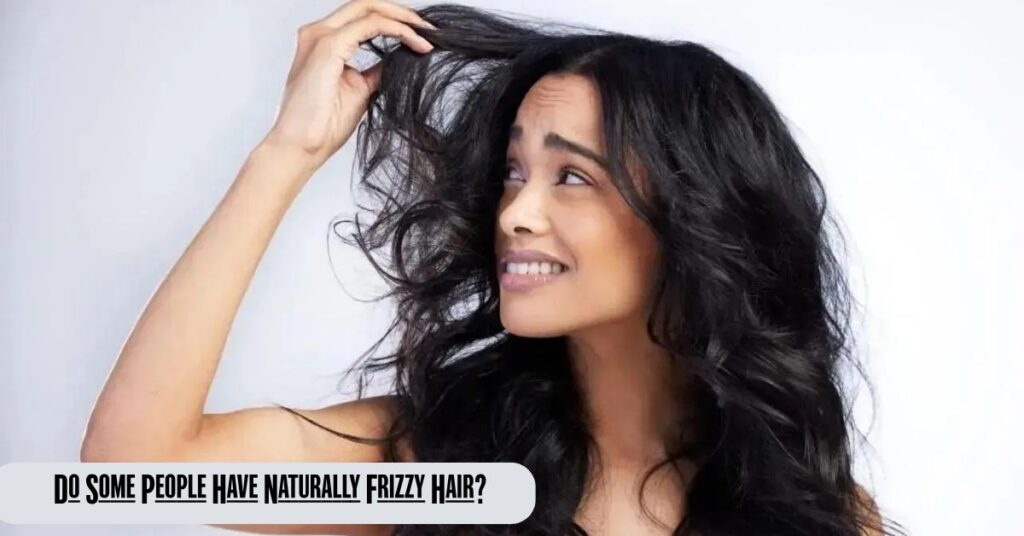
Absolutely and there’s nothing wrong with that. Your hair follicle shape determines your natural texture. Round follicles produce straight hair. Oval or asymmetrical follicles produce wavy, curly, or coily hair. The more curved your follicle, the harder it is for natural oil distribution in hair to travel down the entire shaft which means the ends stay dry and prone to frizzy hair causes regardless of what products you use.
This is especially true for people with Type 3 and Type 4 curl patterns, who often experience dry and porous hair structure as a default state. Naturally frizzy hair isn’t damaged hair it’s just hair that needs more targeted moisture and care. In fact, embracing your natural texture while managing hair moisture balance is often more effective and healthier than fighting against it with excessive heat or chemical treatments.
Environmental Causes: Humidity & Weather
External humidity exposure is one of the most well-documented frizzy hair causes in hair science. Here’s the simple version: hair is hygroscopic, which means it absorbs water from the air. When humidity effect on hair strands kicks in, each strand swells unevenly especially if you have high hair porosity. The result is that chaotic, poofy texture that no amount of smoothing seems to fix. Interestingly, it’s not just high humidity that causes problems. Dry air causes dehydration of hair strands, which creates static flyaways a different kind of frizz but equally frustrating.
Where you live in the USA matters more than most people realize. Here’s a quick breakdown:
| Region | Primary Frizz Trigger | Best Defense |
| Southeast (FL, GA, LA) | High summer humidity | Anti-humidity serum, gel cast |
| Pacific Northwest (OR, WA) | Rain and damp air | Waterproof styling products |
| Southwest (AZ, NV) | Dry desert air, static | Heavy moisturizing oil |
| Northeast (NY, MA) | Summer humidity + dry winters | Seasonal product switching |
| Midwest (IL, OH) | Hard water + dry winters | Shower filter + deep conditioning |
Anti humidity hair care routine practices like applying a leave in conditioner for frizz before stepping outside can make a dramatic difference in all of these climates.
Hair Care Mistakes That Cause Frizz
Here’s the truth: most frizzy hair causes aren’t bad luck. They’re habits. The way you wash, dry, and style your hair every single day either helps or hurts your hair cuticle damage situation. The biggest offender? Rubbing your hair dry with a regular cotton towel. That friction roughens the open cuticle layer aggressively, especially on wet hair when it’s most fragile. Switching to a microfiber towel hair drying method blotting and squeezing instead of rubbing can reduce frizz almost immediately.
Other mistakes are sneakier. Washing with hot water feels amazing but strips natural oil distribution in hair from your scalp and strands. Using shampoos with sulfates removes too much of your hair’s natural moisture barrier. Hair conditioning treatments skipped even once can leave your cuticle dry and lifted. And brushing curly or wavy hair while dry? That physically breaks apart the curl pattern and causes mechanical frizz. Small changes add up fast when it comes to frizzy hair home remedies and routine corrections.
What Happens When Hair Becomes Frizzy? (Hair Science Explained)
Let’s get a little nerdy for a moment because understanding what actually happens inside your hair strand makes every fix make more sense. Your hair has three layers: the medulla (core), cortex (middle), and cuticle (outer shell). The cuticle is made of overlapping scales, and when those scales lie flat, your hair looks smooth and shiny. When they lift due to moisture absorption in hair, heat, or chemical damage your hair becomes rough, dull, and frizzy. Smoothing hair cuticle is essentially the goal of almost every frizz-fighting product on the market.
Inside the cortex, hydrogen bonds hold your hair’s shape. Water breaks these bonds temporarily which is why hair is so vulnerable when wet and why water absorption causing frizz is such a common problem. Meanwhile, keratin loss in hair fibers from heat or chemical processing leaves gaps in the cuticle, making moisture absorption in hair uneven and chaotic. Protein moisture balance hair is the concept that addresses this directly your hair needs both protein (to fill structural gaps) and moisture (to stay flexible). Too much of one without the other creates a new set of problems. Damaged hair repair process starts by getting this balance right.
How to Get Rid of Frizzy Hair (Step-by-Step Guide)
How to fix frizzy hair doesn’t have to be complicated. What it does require is consistency and the right sequence of steps. Think of it like skincare the order you apply things matters just as much as what you apply. Hair hydration tips work best when layered correctly, starting from the shower and finishing with your styling products.
Read More About: Hair Cut for Girls: 50+ Trendy Hair Cutting Styles for Every Age & Hair Type
Follow this proven routine:
| Step | Action | Key Benefit |
| 1 | Wash with frizz control shampoo (sulfate-free) | Preserves natural oils |
| 2 | Apply a deep conditioning hair mask weekly | Replenishes moisture absorption in hair |
| 3 | Rinse with cool water | Smoothing hair cuticle shut |
| 4 | Blot with microfiber towel hair drying | Reduces friction frizz |
| 5 | Apply leave in conditioner for frizz while damp | Locks hydration in |
| 6 | Add hair serum benefits product or oil | Seals and protects |
| 7 | Use heat protectant before styling | Prevents heat styling damage to hair |
| 8 | Blow-dry with a concentrator nozzle, downward | Keeps cuticle flat |
| 9 | Finish with cool shot button | Final smoothing hair cuticle seal |
This sequence addresses hair frizz control from wash day through styling. Stick with it for two to three weeks and you’ll notice a real difference in texture, shine, and manageability.
How to Fix Frizzy Hair in 5 Minutes
Life doesn’t always give you time for a full routine. Sometimes you need anti frizz tips that actually work in the time it takes to find your keys. The fastest fix? Rub a small amount of hair serum benefits product between your palms and lightly smooth it over the surface of your hair not scrunching it in, just taming the surface. This addresses rough hair texture on top without weighing down your style. A leave in conditioner for frizz in a spray bottle works the same way on slightly damp sections.
Another fast trick is the cool shot method. If you have a blow dryer nearby, blast your hair on the cool setting for 60 seconds. Cool air contracts the open cuticle layer shut and reduces frizz due to environmental factors temporarily. You can also smooth a flyaway section by wrapping it around a paddle brush and hitting it with cool air. For curly or wavy hair, lightly mist with water, scrunch upward, and let it re-set. These frizzy hair home remedies won’t give you a blowout result but they’ll get you out the door looking polished.
How to Fix Frizzy Hair in the Morning
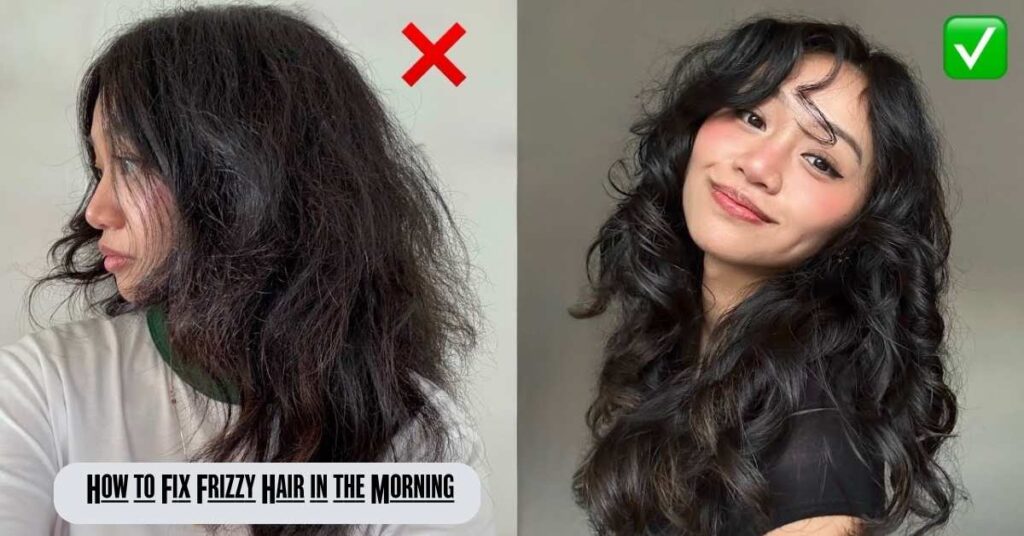
Morning frizz is its own specific challenge. While you slept, your hair rubbed against your pillowcase, losing moisture and disrupting its cuticle especially if you’re still sleeping on cotton. Hair hydration tips for mornings start the night before, but if you’re already at the mirror, here’s what works. Lightly mist your hair with water mixed with a few drops of oil or a leave in conditioner for frizz. This rehydrates dehydration of hair strands that happened overnight without fully re-wetting your style.
For straight hair, a hair smoothing techniques approach works best a tiny amount of serum or a quick pass with a flat iron on a low setting can sort out sleep-induced frizz fast. For curly and wavy hair, the “refresh method” is your best friend: mist, scrunch, and either diffuse briefly or let air dry. Avoid pulling a brush through dry curly hair in the morning that’s one of the fastest ways to turn manageable hair into a full rough hair texture disaster. Work with what you have and enhance it rather than fight it.
Overnight Routine to Prevent Frizz
The overnight window is genuinely underrated for hair frizz control. While you sleep, seven to eight hours pass where your hair either loses moisture and gets damaged or gets protected and nourished. A silk pillowcase for hair is the single easiest upgrade you can make. Unlike cotton, silk doesn’t absorb your hair’s moisture or create the friction that roughens the open cuticle layer overnight. Satin works similarly and costs less, making it a popular option for budget-conscious shoppers.
Beyond the pillowcase, your sleeping style matters. Curly hair does well in the pineapple method a loose, high bun secured with a scrunchie that protects your curl pattern. Wavy hair benefits from a loose braid. Straight hair can be left loose on a silk pillowcase for hair or gently wrapped. Adding a few drops of lightweight oil to your ends before bed supports restoring hair moisture barrier while you sleep, addressing lack of hair hydration that builds up over time. A hair bonnet made from satin or silk takes this protection even further, especially for natural and textured hair types.
Read More About: 30 Best High Neck Dress Hairstyles: The Ultimate Style Guide
How to Fix Frizzy Hair Based on Hair Type
Frizzy hair causes aren’t one-size-fits-all and neither are the solutions. Your hair smoothing techniques need to match your actual hair type. What works brilliantly for straight hair can completely ruin curly hair, and vice versa. Understanding your texture is step one of any serious hair care routine for frizz.
Fixing Frizzy Straight Hair
Straight hair frizz issues usually show up as flyaways, static, or a halo of fine frizz around the face not the full-volume puff you see with curly hair. This happens because straight hair is more prone to scalp oil production imbalance, where oils travel quickly down the shaft but the fine strands still get static from friction and dry air. Flyaway hair solutions for straight hair include lightweight serums, ionic blow dryers that neutralize static charge, and finishing sprays that add a light hold.
One important thing: straight hair frizz often means you’re either over-washing and stripping oils, or using products too heavy for your texture. A frizz control shampoo formulated for fine or normal hair not one loaded with heavy butters keeps hair moisture balance without weighing strands down. Brushing from the bottom up with a boar bristle brush helps distribute natural oil distribution in hair evenly from root to tip, reducing dryness at the ends where split ends treatment becomes necessary.
Fixing Frizzy Wavy Hair
Wavy hair sits in the most awkward position of all hair types it’s not straight enough to lie flat and not curly enough to clump into defined spirals. This in-between state makes wavy hair frizz solutions a specific science. The key is enhancing the wave pattern while keeping the hair cuticle damage to a minimum. Scrunching a leave in conditioner for frizz into soaking wet hair, then plopping with a microfiber towel hair drying for 20 minutes before diffusing, gives wavy hair the definition it needs to avoid frizz.
Never brush dry wavy hair. It breaks the wave pattern and causes hair fiber roughness that no product can fully fix afterward. Instead, use a wide-tooth comb only on wet, conditioned hair. Curly girl method principles apply beautifully to wavy hair specifically avoiding sulfates, skipping silicones, and using deep conditioning hair mask treatments weekly. Protein moisture balance hair is especially important for wavy types, who often need a light protein treatment every few weeks to maintain hair elasticity and strength.
Fixing Frizzy Curly Hair
Curly hair is inherently drier than any other hair type. Because of the coiled shape of each strand, natural oil distribution in hair from the scalp simply can’t travel all the way to the ends which means dehydration of hair strands is almost constant without intentional moisture replacement. Curly hair frizz control requires a moisture-first mindset. Deep conditioning isn’t optional it’s the foundation. A deep conditioning hair mask used every 7–10 days replenishes what daily styling and environmental exposure strip away.
Styling technique matters enormously for curly hair. Apply your leave in conditioner for frizz and curl cream to dripping wet hair the wetter the better. Use the “praying hands” method to smooth products down the hair shaft, followed by scrunching to encourage curl formation. Diffuse on low heat or air dry without touching. The golden rule? Don’t touch your curls while they dry. That’s how frizz due to environmental factors and handling turn a good curl day into a frizzy one. Anti frizz tips for curly hair always come back to one principle: seal the open cuticle layer with moisture before the outside air can get in.
Best Ingredients & Products for Frizzy Hair
Not every product labeled “anti-frizz” actually works and some make hair cuticle damage worse. The ingredient list tells you everything. Best products for frizzy hair contain ingredients that either penetrate the shaft to hydrate, coat the shaft to protect, or both. Understanding what to look for (and what to avoid) saves money and protects your hair long-term.
Ingredients to look for:
| Ingredient | What It Does | Best For |
| Glycerin | Pulls moisture absorption in hair from air | All hair types in moderate humidity |
| Argan oil | Smooths and adds shine | Fine to medium hair |
| Shea butter | Deep moisture for dry and porous hair structure | Thick, coily, or coarse hair |
| Keratin | Fills keratin loss in hair fibers gaps | Damaged or chemically treated hair |
| Panthenol (B5) | Strengthens and hydrates | All types, especially fine hair |
| Coconut oil | Penetrates the hair shaft damage | Medium to coarse hair |
| Hyaluronic acid | Binds and retains moisture | All types, especially dry hair |
Ingredients to avoid:
| Ingredient | Why It Makes Frizz Worse |
| Sulfates (SLS/SLES) | Strips natural oil distribution in hair |
| Drying alcohols (SD, isopropyl) | Causes dehydration of hair strands |
| Non-water-soluble silicones | Build up over time, block moisture |
| Parabens | Disrupt scalp oil production imbalance |
Serums, Oils & Leave-In Treatments
Hair serum benefits go beyond just shine. A good serum creates a protective film over the open cuticle layer, blocking external humidity exposure before it can swell your strands. Silicone-based serums give immediate smoothness and are great for blowouts. Oil-based serums like argan, marula, or jojoba penetrate and nourish dry and porous hair structure from within. The key is applying them correctly: leave in conditioner for frizz goes on first (on wet hair), oil goes second, and serum goes last to seal everything in. Layering in this order gives you the anti humidity hair care routine your hair actually needs.
Dry hair treatment options in this category include hot oil treatments, bond repair serums like Olaplex, and protein-enriched leave-ins. For at-home frizzy hair home remedies, pure argan oil or a mixture of aloe vera gel and castor oil applied to damp hair works surprisingly well. Aloe vera helps balance protein moisture balance hair naturally while castor oil adds weight and shine. These natural frizz remedies won’t replace a great salon treatment, but used consistently, they absolutely support damaged hair repair process over time.
Shampoos & Conditioners for Frizz Control
Your frizz control shampoo is the foundation of everything. If you’re washing with a sulfate-heavy formula, you’re stripping natural oil distribution in hair every single time and no amount of conditioning afterward fully compensates. A good dry hair treatment shampoo should be sulfate-free, contain moisturizing ingredients like glycerin or panthenol, and have a pH around 4.5–5.5 to encourage smoothing hair cuticle naturally. For very dry or textured hair, co-washing (washing with conditioner only, skipping shampoo entirely) once or twice a week dramatically reduces rough hair texture over time.
Hair conditioning treatments should be non-negotiable in your routine. Rinse-out conditioners replace surface moisture and add slip. Deep conditioning hair mask treatments go further they penetrate the cortex, replenish keratin loss in hair fibers, and improve hair elasticity and strength. Use a deep mask at least once a week if your hair is frizzy, damaged, or color-treated. Always apply conditioner from mid-shaft to ends not the scalp and leave it on for at least five minutes before rinsing with cool water to seal in the benefits.
Tools That Help Reduce Frizz
The right tools are just as important as the right products. An ionic blow dryer, for example, doesn’t just dry hair faster it emits negative ions that break down water molecules more efficiently, reducing the dehydration of hair strands caused by prolonged heat exposure. A diffuser attachment distributes airflow evenly across curls and waves, preventing the frizz due to environmental factors that direct airflow causes by roughening the cuticle.
| Tool | Why It Works | Best For |
| Microfiber towel hair drying | Reduces friction on open cuticle layer | All hair types |
| Ionic blow dryer | Neutralizes static, speeds drying | Straight and wavy hair |
| Diffuser attachment | Preserves curl pattern, reduces frizz | Curly and wavy hair |
| Wide-tooth comb | Detangles without hair breakage and split ends | Curly and coily hair |
| Boar bristle brush | Distributes natural oil distribution in hair | Straight and wavy hair |
| Silk pillowcase for hair | Reduces overnight friction | All hair types |
| Shower filter | Removes minerals causing hair cuticle damage | Hard water areas |
Every one of these tools addresses a specific source of hair cuticle damage or moisture loss. You don’t need all of them at once start with the microfiber towel hair drying and silk pillowcase for hair and work your way from there.
How to Prevent Frizzy Hair Long-Term
Short-term fixes feel great. But hair frizz control that actually lasts requires building habits that consistently support restoring hair moisture barrier over weeks and months. Think of it like fitness one good workout doesn’t transform your health, and one good hair mask doesn’t transform your frizz. The cumulative effect of daily and weekly habits is what changes your hair’s baseline texture and health.
Anti frizz tips for long-term success include protecting your hair from the sun (UV causes keratin loss in hair fibers), drinking enough water (internal hair hydration tips matter), eating foods rich in omega-3 fatty acids and biotin, and scheduling regular trims every 8–12 weeks. Split ends treatment through regular trims prevents the fraying from traveling further up the shaft saving more of your length in the long run. Reduce hair breakage by handling hair gently, especially when wet and most vulnerable.
Daily Hair Care Routine for Smooth Hair
A consistent hair care routine for frizz doesn’t have to be complicated. In the morning, refresh your hair with a light mist of water and a few drops of oil, style as needed, and protect it from external humidity exposure with a finishing product. In the evening, apply a lightweight oil to your ends, protect with a silk pillowcase for hair or bonnet, and let your hair rest. Weekly, use a deep conditioning hair mask and clarifying shampoo (once a month) to remove buildup that blocks moisture from entering the shaft. This rhythm keeps protein moisture balance hair in check and supports damaged hair repair process continuously.
Heat Styling Tips Without Damage
Heat styling is one of the top frizzy hair causes but quitting it entirely isn’t realistic for most people. The key is doing it smartly. Always apply a heat protectant that covers up to at least 350°F before touching any tool to your hair. This creates a barrier that reduces heat styling damage to hair and slows keratin loss in hair fibers with each styling session.
| Hair Type | Recommended Max Temperature | Tool Tip |
| Fine or damaged | 300°F | Use lowest effective heat |
| Medium texture | 350°F | One slow pass is better than multiple |
| Thick or coarse | Up to 400°F | Section well for even heat |
Always finish with the cool shot button on your blow dryer it’s the most underused feature in hair care. Cool air contracts the open cuticle layer shut, locking in your style and boosting shine. This simple step is one of the most effective hair smoothing techniques available on any budget.
Best Fabrics & Sleeping Habits for Hair
Cotton is convenient but genuinely rough on hair. It absorbs moisture from your strands contributing to dehydration of hair strands overnight and its woven texture creates friction that roughens the hair cuticle damage with every toss and turn. A silk pillowcase for hair solves both problems. Silk is naturally smooth and far less absorbent, meaning your hair retains its moisture and slides rather than snags while you sleep.
Satin is a more affordable alternative that offers similar flyaway hair solutions without the silk price tag. Beyond the pillowcase, a loose bun, braid, or pineapple method (for curly hair) protects your style and reduces tangling. Wearing a silk pillowcase for hair bonnet takes protection even further particularly for natural hair types with dry and porous hair structure that lose moisture quickly. These overnight habits are among the simplest and most effective frizzy hair home remedies you can implement tonight.
Can You Make Your Hair Frizzy on Purpose?
Sometimes frizz is the goal. Textured, voluminous hair is a huge trend and achieving it intentionally is a lot healthier than getting it through damage. Salt sprays create a beachy, piecey rough hair texture that looks effortlessly cool on wavy hair. Scrunching with a microfiber towel hair drying while your hair is wet and then diffusing upside down creates massive curl volume. Backcombing or teasing at the roots adds intentional frizzy lift for straight hair looks.
The difference between intentional texture and damaging frizz is protection. When you’re creating wavy hair frizz solutions for a purposeful style, you’re starting with healthy, moisturized hair and using hair smoothing techniques in reverse encouraging the open cuticle layer to lift slightly for volume rather than sealing it down. Always start with a heat protectant and finish with a light-hold spray to keep the style from turning into uncontrolled frizz by mid-day.
FAQs
What is frizzy hair?
Frizzy hair happens when the hair cuticle lifts instead of lying flat, causing strands to absorb moisture unevenly and look puffy or rough.
How do I stop my hair from frizzing?
Use a sulfate-free shampoo, apply leave-in conditioner on damp hair, dry with a microfiber towel, and sleep on a silk pillowcase every night.
How to stop frizzy ends of hair?
Trim your ends every 8–12 weeks and seal them daily with a small amount of argan oil or a moisturizing leave-in conditioner.
Conclusion
You now have a genuinely complete roadmap for understanding, fixing, and preventing frizzy hair from the science happening inside each strand to the everyday habits that either help or hurt your hair frizz control. The big three takeaways? Understand your hair type and what’s actually driving your frizz. Build a consistent hair care routine for frizz using the right products and tools. And protect your hair between washes especially overnight to support restoring hair moisture barrier day after day.
You don’t need to overhaul everything at once. Start with one change maybe swapping your pillowcase, or switching to a frizz control shampoo and build from there. Hair transformation takes time but the results compound. In a few weeks of consistency, you’ll notice your baseline texture getting smoother, your hair elasticity and strength improving, and your mornings getting a whole lot easier. Your hair deserves that effort and now you know exactly how to give it.


