

Best Hair Braiding: Complete Beginner Guide + 25 Braid Hairstyles for Women
Have you ever watched someone walk by with the most stunning braided hairstyles and thought, “I could never pull that off”? Here’s the truth you absolutely can. Hair braiding isn’t some mysterious art reserved for professionals. It’s a skill anyone can learn, and once you get started, it becomes genuinely addictive. This complete beginner guide walks you through everything from the basic hair braiding technique to 25 gorgeous braid hairstyles for women you can try right now. Whether you’re hunting for easy braids for beginners or ready to explore trendy braids 2026, this guide has you covered from root to tip.
What Is Hair Braiding? (Beginner Basics Explained)
Hair braiding is one of the oldest styling traditions in human history. At its core, it’s the process of interlacing three or more strands of hair into a unified pattern. Simple idea endless possibilities. Braiding traces back thousands of years across African, Native American, Viking, and Asian cultures. It wasn’t just about looking good. Braids communicated social status, age, tribe, and identity. Today, braided hairstyles dominate runways, red carpets, TikTok feeds, and everyday street style across America.
There are two broad families of braids. First, you have scalp braids styles like cornrows, French braid, and stitch braids that start directly at the root and lie flat against the head. Second, you have free-hanging braids styles like the three strand braid, fishtail braid, and rope braid that dangle freely from a ponytail or gathered section. Understanding this difference helps you figure out which styles match your skill level and your vision.
| Type | Examples | Skill Level |
| Scalp Braids | Cornrows, French Braid, Dutch Braid | Intermediate–Advanced |
| Free-Hanging Braids | Three-Strand, Fishtail, Rope Braid | Beginner–Intermediate |
| Protective Styles | Box Braids, Knotless Braids, Goddess Braids | Advanced / Salon |
Essential Tools & Supplies for Hair Braiding
Before you touch a single strand, you need the right tools. Trying to braid without proper supplies is like trying to paint a wall without a brush frustrating and messy. The good news? You don’t need much. A rat-tail comb is your best friend for creating clean, precise sections. A wide-tooth comb handles detangling without snapping fragile strands. Sectioning clips keep unbraided hair out of your way while you work. A spray bottle filled with water keeps your hair pliable and cooperative throughout the process.
Beyond the basics, edge control and a lightweight styling gel help smooth frizzy edges and keep your style looking polished. If you’re experimenting with protective braid styles like box braids or knotless braids, you’ll also need hair extensions braiding material kanekalon hair is the most popular choice across USA salons. A satin scrunchie or small clear elastics secure your finished braids cleanly. And if you’re serious about longevity, grab a braid spray for daily moisture maintenance.
Read More About: 10 Best Hair Gloss Treatments for Instant Shine and Healthier-Looking Hair
| Tool | Purpose |
| Rat-tail comb | Clean sectioning |
| Wide-tooth comb | Gentle detangling |
| Sectioning clips | Keeping hair organized |
| Edge control | Smoothing flyaways |
| Kanekalon hair | Adding length/volume for protective styles |
| Spray bottle | Keeping hair workable |
| Satin bonnet | Overnight frizz prevention |
How to Braid Hair Step by Step (Beginner-Friendly Guide)
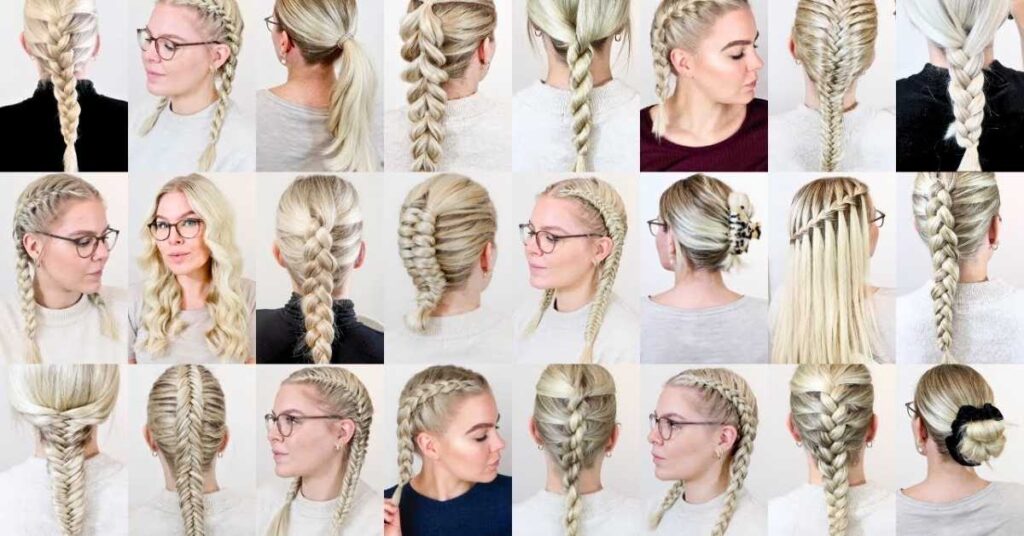
Every expert braider you’ve ever admired started exactly where you are right now confused, a little clumsy, and unsure which hand does what. The three strand braid is the foundation of virtually every hair braiding technique you’ll ever learn. Master this and you unlock French braids, Dutch braids, fishtails, and so much more. Don’t rush it. Slow, deliberate practice builds the muscle memory that eventually makes braiding feel effortless. Grab a section of hair or even a bundle of yarn if you want to practice first and follow these steps carefully.
One thing beginners consistently underestimate is the importance of preparation. Braiding clean, detangled, slightly damp hair produces dramatically better results than rushing in on dry, tangled strands. Take five extra minutes to prep properly. Your braid will look ten times better and last significantly longer.
Section Your Hair Properly
Sectioning sounds boring. It’s actually the secret weapon of every great braid. Start by deciding where your braid will sit center back, side, over the shoulder. Use your rat-tail comb to draw a clean, straight part. The sharper your parting, the more precise and professional your braid looks. Clip away all the hair you’re not braiding so it stays completely out of your way. A messy section leads to a messy braid every single time. Take your time here. Good sectioning makes every step that follows easier and cleaner.
Divide Into Three Equal Strands
Once your section is clean, split it into three equal portions. Hold the left strand in your left hand, the right strand between your right thumb and index finger, and the center strand loosely in the middle. Equal strands matter more than most beginners realize. Uneven sections create a lopsided, uneven braid that looks unintentional rather than stylish. If your sections keep slipping or merging, try slightly dampening the hair it gives the strands just enough grip to behave while you work.
Cross and Repeat Pattern
Here’s the actual braiding motion. Take the right strand and cross it over the center strand the right strand now becomes the new center. Next, take the left strand and cross it over the new center strand now the left becomes the new center. Repeat. Right over center, left over center. That’s it. That’s the entire secret to the classic three strand braid. Keep your tension consistent firm but never painful. Loose tension creates a floppy, undefined braid. Too tight causes scalp tension and discomfort that lasts for days. Find your middle ground and maintain it all the way down.
Secure and Finish the Braid
Braid as far down as your hair allows, leaving about an inch at the end to tie off. Secure with a small elastic band. Now here’s a game-changing finishing trick called pancaking gently tug the outer edges of each braid loop outward using your fingernails. This creates a fuller, thicker, more textured look that elevates a basic braid into something that looks intentional and editorial. For hair extensions braiding, dip the ends briefly in hot water to seal them permanently. Your first braid is done. It won’t be perfect and that’s completely fine.
Read More About: Red Hair Dye: Best Shades, At-Home Guide & Garnier Color Picks (2026)
25 Best Braid Hairstyles for Women (Trending Styles)
This is where things get exciting. Whether you want something quick for a Tuesday morning or something dramatic for a Saturday night, the world of braid hairstyles for women genuinely has it all. These 25 styles range from foolproof beginner options to showstopping salon-worthy looks. Each one is part of the ever-growing types of braids list that keeps growing every year as stylists innovate and trends evolve. Explore them all then pick your starting point.
The styles below represent the best of popular braid styles across the USA right now. They blend classic braid styles with modern braided hairstyles to give you a mix of timeless and fresh. Difficulty ratings use a simple star system so you always know what you’re getting into before you start.
Classic Three-Strand Braid
The three strand braid is where every braiding journey begins. Three sections, one repeating motion, infinite results. It works on every hair type, every length, and every occasion. Dress it up with a ribbon or leave it simple for an effortlessly cool everyday look.
French Braid
The French braid is a scalp braids style where you add small sections of hair to each strand as you work down the head. It creates a gorgeous woven effect that looks far more complicated than it actually is. This is one of the most requested hair braiding ideas at salons and tutorial pages alike.
Dutch Braid
Think of the Dutch braid as the French braid’s bold, three-dimensional sibling. Instead of crossing strands over the center, you cross them underneath which makes the braid pop off the scalp dramatically. Double Dutch braid pigtails are currently one of the most iconic trendy braids 2026 looks across social media
Fishtail Braid
The fishtail braid uses only two sections instead of three. You pull a tiny sliver of hair from the outside of one section and cross it into the other alternating sides repeatedly. The result looks intricate and delicate. Pancake a fishtail braid and you’ve got one of the most breathtaking braids for long hair styles in existence.
Box Braids
Box braids are individual protective hairstyle braids sectioned into small square or box-shaped parts across the entire head. They’re typically created with hair extensions braiding material and can last anywhere from four to eight weeks with proper care. They’re a staple of braids for natural hair culture and have been rocked by icons from Janet Jackson to Beyoncé.
Knotless Braids
Knotless braids are the modern evolution of box braids. Traditional box braids start with a knot that anchors the extension hair knotless braids feed the extension in gradually, eliminating that tight anchor point entirely. The result is dramatically reduced scalp tension, less risk of traction alopecia, and a more natural-looking root
Cornrow Braids
Cornrows are flat, tight scalp braids that follow a straight or curved path along the scalp. They’ve been a cornerstone of Black hair culture for centuries and remain one of the most versatile protective braid styles today. Simple straight-back cornrows are a great first scalp braid to attempt.
Goddess Braids
Goddess braids are essentially oversized cornrows thick, chunky, and commanding. They’re bold, protective, and undeniably beautiful. Leave the ends loose and flowing for a dramatic goddess aesthetic, or curl them for added glamour. These sit firmly in the category of modern braided hairstyles that blend tradition with high fashion.
Crown & Halo Braids
The crown braid and halo braid are romantic styles where a braid wraps around the entire perimeter of the head like a floral crown. They work beautifully on medium to long hair and are absolute showstoppers at weddings, graduations, and garden parties
Waterfall Braid
The waterfall braid is a variation of the French braid where, instead of incorporating dropped strands into the braid, you let them fall freely creating a cascading waterfall effect through the hair. It’s romantic, whimsical, and looks spectacular on wavy or straight braids for long hair..
Rope Braid
The rope braid is technically a twist, not a braid but it produces one of the most beautiful results with the least effort. You split hair into two sections, twist each section in the same direction, then wind them around each other in the opposite direction. It holds itself in place. One of the best easy braids for beginners in the game
Stitch Braids
Stitch braids are cornrows elevated with a horizontal feeding technique. Clean horizontal parts are created between each row as hair is added, creating a stitched or feed-in pattern along the scalp. They look sharp, precise, and incredibly sleek.
Micro Braids
Micro braids are tiny, delicate individual braids created using very small sections of hair throughout the entire head. They’re time-consuming sometimes taking six to eight hours but the result is incredibly versatile and long-lasting. Style them in a bun, ponytail, or loose for a completely different look each day.
Braided Space Buns
Braided space buns take the classic space bun and replace each bun with a coiled or wrapped braid. They’re fun, youthful, and genuinely one of the most effortless-looking everyday braid styles you can create in under ten minutes. Perfect for festivals, casual outings, or just a day when you want to feel playful
The table below gives you a quick comparison of all 25 popular braid styles covered in this guide.
How to Choose the Right Braid Style for Your Hair Type
Not every braid works on every head and knowing that upfront saves you a lot of frustration. The key is matching the different braiding techniques to your actual hair texture, length, and density. Fine hair struggles under the weight of heavy box braids without extensions. Thick natural hair can handle almost anything. Wavy hair loves a fishtail braid or waterfall braid because the natural texture adds incredible dimension. Take an honest look at what you’re working with before choosing your style. It makes all the difference.
Think of it this way: choosing the wrong braid for your hair type is like wearing shoes two sizes too small. Technically possible but uncomfortable and ultimately counterproductive. The right match between your hair and your chosen style makes braiding easier, makes the result more beautiful, and keeps your hair healthier long-term.
Best Braids for Short Hair
Short hair isn’t a limitation it’s just a different canvas. Braids for short hair include rope braid pieces, cornrows, micro braids, and braided space buns. If your hair is on the shorter side but you want longer-looking box braids or goddess braids, hair extensions braiding is your answer. Extensions add length and volume that make virtually any style achievable regardless of your natural hair length. Even a simple French braid on short hair can look chic and intentional with the right technique.
Best Braids for Long Hair
Long hair is a braider’s playground. Braids for long hair include the fishtail braid, waterfall braid, halo braid, milkmaid braid, four-strand braid, and long flowing box braids. The extra length lets you really explore complex patterns and layered techniques. One practical tip: always secure long hair at the nape of your neck before you start braiding it prevents the lower layers from escaping and creating bulk mid-braid. Long hair also pancakes beautifully, giving styles like the fishtail braid that dreamy, voluminous look you see all over Pinterest boards.
Protective Braids for Natural Hair
Braids for natural hair aren’t just a style choice they’re a strategic hair health decision. A protective hairstyle works by tucking away your ends (the oldest and most fragile part of any hair strand) and minimizing daily manipulation. Less daily styling means less breakage. Less breakage means retained length over time.
Knotless braids, box braids, cornrows, stitch braids, and goddess braids are all superb protective braid styles for natural textures ranging from 3C to 4C. The critical thing to watch is scalp tension braids that pull too tight cause traction alopecia, a form of gradual hair loss along the hairline that can become permanent if left unchecked. According to the American Academy of Dermatology, traction alopecia affects a significant portion of women who wear tight protective hairstyle consistently. Always insist on comfortable tension snug but never painful.
Easy Braid Styles for Beginners You Can Do at Home
The biggest lie in the braiding world is that beautiful braids require expensive salon visits. They don’t. Dozens of stunning easy braids for beginners can be done at home, alone, in front of a mirror, with zero professional training. The key is starting with the right styles ones with simple mechanics that still deliver a polished result. Build your confidence there first. Then gradually level up to more complex different braiding techniques as your hands get more practiced.
Honestly, home braiding is one of the most satisfying skills you can pick up. Once you nail a style, you’ll do it in minutes. And there’s something genuinely rewarding about looking in the mirror and thinking, “I did that myself.”
5-Minute Quick Braids
When you have exactly five minutes and need to look put-together, these everyday braid styles save the day every time. A rope braid takes two minutes. A simple side three strand braid takes three. Braided space buns four minutes max. These aren’t compromises. Done well, they look intentional, stylish, and effortlessly cool. The secret to fast braids is working on slightly damp, product-free hair and not overthinking the technique. A quick mist from your spray bottle, a smooth-through with your wide-tooth comb, and you’re braiding.
Simple Everyday Braids
Simple braids tutorial content has exploded on YouTube and TikTok for a reason people genuinely want everyday braid styles that work for real life. A low braided ponytail with a wrapped strand to hide the elastic. A loose side French braid with a few strands pulled out to frame the face. A milkmaid braid that wraps around the crown. These are the simple braids tutorial styles that real women wear to work, school, the grocery store, and brunch. They require minimal tools, minimal time, and deliver maximum style returns. Elevate any simple braid with a silk scrunchie, a pearl clip, or a few bobby pins and suddenly it looks like you tried really hard even though you didn’t.
How to Maintain Braided Hair (Care Tips & Longevity)
Getting your braids done is just the beginning. How you take care of them afterward determines whether they look fresh for six weeks or raggedy in six days. Braided hair care is a non-negotiable part of the hair braiding process especially for protective braid styles that you’re investing significant time (and often money) into. Think of braid maintenance as protecting your investment. A few minutes of care each day keeps your braids looking salon-fresh and your scalp feeling healthy and comfortable underneath.
The biggest mistake people make after getting braids is ignoring their scalp. Out of sight doesn’t mean out of mind. Your scalp still produces oil, accumulates buildup, and needs regular moisture to stay healthy. Neglect it and you’ll end up with itching, flaking, and even weakened hair follicles by the time you take your braids out.
How Long Do Braids Last?
The answer depends entirely on the style and how well you maintain it. Box braids and knotless braids last four to eight weeks with proper care. Cornrows typically hold for two to four weeks before new growth at the roots makes them look fuzzy. Goddess braids last about two to four weeks as well. Simpler at-home styles like a three strand braid or rope braid are meant for single-day wear. Micro braids can last up to three months, though most stylists recommend refreshing them at the eight-week mark to prevent matting.
| Style | Average Longevity | Refresh Point |
| Box Braids | 4–8 weeks | 6 weeks |
| Knotless Braids | 4–8 weeks | 6 weeks |
| Cornrows | 2–4 weeks | 3 weeks |
| Goddess Braids | 2–4 weeks | 3 weeks |
| Micro Braids | 8–12 weeks | 8 weeks |
| Classic/French Braid | 1 day–1 week | Daily refresh |
How to Wash Braided Hair
Yes you absolutely still need to wash your hair while it’s braided. Skipping washes causes scalp buildup, odor, and weakened follicles. The trick is doing it without destroying your braids. Dilute a small amount of clarifying or gentle shampoo with water in a spray bottle. Apply it directly to your scalp in sections, massage gently with your fingertips (not your nails), then rinse carefully with lukewarm water. Follow with a lightweight conditioner applied only to your braids not the roots, which can loosen them. Squeeze out excess water gently and allow your braids to air dry completely. Sitting under a hooded dryer speeds up drying time significantly. Never go to bed with damp braids it encourages mildew and unpleasant odor.
How to Prevent Frizz & Damage
Frizz is the universal enemy of beautiful braids. It creeps in overnight, accelerates in humidity, and makes week-two braids look like week-six braids. Fortunately, it’s entirely preventable. A satin bonnet or satin pillowcase is your single most powerful tool against frizz it eliminates the cotton-friction that roughens your braid surface while you sleep. During the day, a light braid spray or diluted leave-in conditioner keeps strands smooth and moisturized. Edge control applied with a soft toothbrush keeps your hairline looking fresh between wash days. Avoid excessive touching and re-styling the less you manipulate your braids, the longer they stay looking fresh.
Common Hair Braiding Mistakes to Avoid
Every beginner makes mistakes. That’s completely normal and part of the learning curve. However, some mistakes are more damaging literally than others. Knowing what to watch for helps you protect both your hair and your progress. The braiding world has a handful of recurring errors that show up constantly across beginners and even some experienced stylists who’ve developed bad habits over time.
Here are the most important mistakes to eliminate from your braiding practice immediately.
Braiding dirty or heavily product-coated hair
Product buildup makes hair stiff, sticky, and harder to braid cleanly. It also traps buildup inside your braids and accelerates frizz. Always start fresh.
Skipping detangling
Jumping straight into braiding tangled hair causes breakage at every knot you hit. A wide-tooth comb from ends to roots before you start is non-negotiable.
Uneven tension throughout the braid
Tension that varies from section to section creates bumpy, uneven braids that look unprofessional. Practice maintaining consistent pressure from the very first cross to the very last.
Braiding too tightly
This is the most dangerous mistake on this list. Excessive scalp tension leads to traction alopecia gradual, potentially permanent hair loss along the hairline and temples. If your scalp hurts, your braids are too tight. Full stop.
Leaving braids in too long
Every protective hairstyle has a recommended wear time for a reason. Leaving box braids in for twelve weeks instead of eight causes new growth to tangle and mat around the braid base, leading to breakage when you finally remove them.
Neglecting scalp moisture
Dry scalp under braids leads to itching, flaking, and damaged follicles. A lightweight scalp oil applied every three to four days through the braids keeps everything balanced.
Sleeping without a satin bonnet
One night on a cotton pillowcase undoes days of frizz prevention. This is the simplest, cheapest habit that makes the biggest difference.
Using the wrong products
Heavy waxes and thick butters cause buildup that dulls your braids and attracts lint. Opt for lightweight oils argan, jojoba, or sweet almond and water-based sprays for daily maintenance.
FAQ’s
Is Hair Braiding Good for Hair Growth?
Braiding doesn’t directly grow hair, but it protects it. Protective braid styles reduce breakage and retain length over time. Think of it as shielding your hair not speeding it up.
Can Beginners Learn Braiding Easily?
Yes anyone can learn with a little patience. Start with the three strand braid and practice daily until it feels natural. Most beginners get comfortable within just a few days.
What Is the Easiest Braid to Start With?
The classic three strand braid wins every time. It’s a simple repeat motion right over center, left over center. Master that and every other style becomes much easier.
How Tight Should Braids Be?
Snug enough to hold never tight enough to hurt. Pain or soreness at the roots means your braids are too tight. Overly tight braids cause traction alopecia and long-term hairline damage.
Conclusion
Hair braiding is so much more than a hairstyle. It’s a tradition. A skill. A form of self-expression that women across America and around the world have used for thousands of years to communicate beauty, identity, and creativity. Whether you came to this guide looking for easy braids for beginners, curious about protective braid styles for your natural hair, or simply hunting for fresh hair braiding ideas to try this weekend you’ve got everything you need right here. Start with the three strand braid. Practice until it feels easy. Then work your way through this list of 25 stunning braid hairstyles for women one style at a time.
Don’t chase perfection on day one. Chase progress. Your hands will get more confident, your sections will get cleaner, and your braids will get better with every attempt. The only difference between you right now and the braiders you admire on Instagram is time and practice. Both of those things are completely within your control. Now go braid something and share this guide with a friend who’s been wanting to try braided hairstyles too.


