

10 Type 4C Hair: The Complete Guide to 4C Hair Care, Styles & Maintenance
If you’ve ever watched your hair shrink from shoulder-length to ear-length the second it dried, you already know the 4c hair experience. It’s wild. It’s beautiful. And honestly? It’s one of the most misunderstood hair textures on the planet. Too many people waste years fighting their natural hair instead of learning how to work with it. This guide changes that.
Whether you’re brand new to your natural hair journey or you’ve been rocking your coily hair for years, there’s something here for you. We’re covering everything from what type 4 hair actually is, to the best products, routines, styles and growth tips built specifically for afro textured hair. No fluff. No gatekeeping. Just real, in-depth knowledge that helps your healthy natural hair actually thrive.
What Is 4C Hair?
4C hair sits at the very end of the hair typing system and that’s not a bad thing. It just means your curl pattern is the tightest, most compact version of type 4 hair that exists. The system most people use today was developed by celebrity stylist Andre Walker, who created a scale ranging from straight (Type 1) all the way to the tightest kinky hair (Type 4C). Within that scale, 4c natural hair has the smallest coil diameter, the highest hair density and the most dramatic hair shrinkage of all curl types.
What makes 4C hair stand out isn’t just its pattern though. It’s the personality. This textured hair can be stretched into a sleek style one day and worn as a full, breathtaking afro hair the next. It holds twist hairstyles, braids and bantu knots like a dream. It can look totally different depending on moisture levels, the products you use and how you handle it on wash day routine. If you’ve been told your hair is “difficult,” the truth is simpler it just hasn’t been properly understood. Until now.
Understanding the Type 4C Hair Pattern
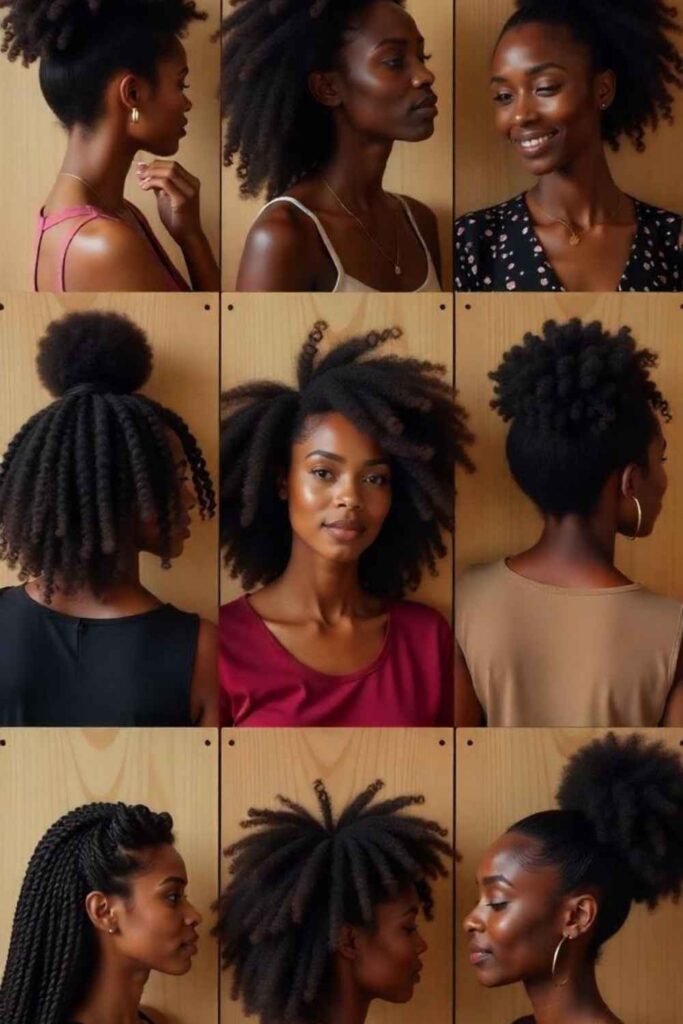
The curl pattern of 4C hair is a tight zig-zag shape. Unlike Type 3 curls that form visible spirals, or even 4B hair that has a clear Z-shape, 4c natural hair coils are so compact they often look undefined without product. When you look at a single strand under a magnifying glass, you’ll see a series of sharp bends and angles rather than a smooth loop. That structure is what gives 4C hair its volume, its density and yes, its infamous shrinkage.
Hair porosity plays a massive role in how the curl pattern behaves day to day. Low porosity 4c hair has tightly sealed cuticles, which means moisture struggles to get in but once it does, it stays longer. High porosity hair care looks different: the cuticles are more open, so hair absorbs moisture fast but loses it just as quickly. Knowing your porosity is genuinely one of the most important steps in building a 4c hair routine that actually works for your specific strands, not just someone else’s YouTube tutorial.
Is 4C Hair the Tightest Curl Pattern?
Yes 4C hair is officially the tightest curl type on the Andre Walker scale. The coils are so small and tightly packed that a single inch of stretched hair can condense down to a quarter inch when dry. That’s not a problem that’s just physics. The tighter the curl pattern, the more bends exist per strand, and the more those bends stack on top of each other when the hair contracts. For context, Type 3C hair might shrink 30 to 40 percent. 4C hair shrinkage regularly hits 70 to 75 percent or more.
Here’s what’s important to understand: tighter does not mean weaker or worse. It means different. Afro textured hair has a unique internal structure with a more elliptical cross-section compared to straight hair, which does make it more prone to hair breakage at the bends but that’s a curl care challenge, not a character flaw. With the right hair routine, 4C hair can be just as strong, just as long and just as resilient as any other curl type on the scale.
Characteristics of 4C Hair
4C hair has a very specific set of traits that set it apart from every other curl type. Once you recognize these traits, caring for your hair stops feeling like guesswork and starts feeling intentional. The most obvious characteristic is the tightly packed zig zag curls that form without a clear spiral or S-shape. Another defining feature is hair density most people with 4c natural hair have a lot of strands per square inch, which creates that gorgeous, full appearance even when the hair is short.
Moisture retention is also a central characteristic or more accurately, the challenge of it. Because of the tight bends in each strand, the scalp’s natural oils (sebum) can’t travel down the hair shaft as easily as they can on straight hair. This is why dry hair is such a common complaint in the 4C hair community. It’s not that the scalp isn’t producing oil it’s that the oil gets stuck in the coils near the root and never makes it to the ends. That’s exactly why hair hydration tips, layered moisturizing methods and leave in conditioner are non-negotiable parts of any solid 4c hair routine.
Common 4C Hair Texture Traits
| Trait | What It Means for Your Hair |
| Tight zig-zag coils | Little visible curl definition without product or manipulation |
| High hair density | Lots of strands looks full but can feel heavy |
| Extreme shrinkage | Hair appears much shorter than its actual length |
| Low natural sheen | Sebum doesn’t travel far down the shaft |
| Prone to single-strand knots | Coils wrap around themselves, especially at the ends |
| Low elasticity when dry | Dry strands snap more easily always detangle wet |
| High manipulation sensitivity | Over-touching leads to hair breakage fast |
Why 4C Hair Shrinks So Much
4C hair shrinkage is the most talked-about trait in the 4c natural hair community and for good reason. It genuinely surprises people. You might wash your hair, watch it hang beautifully while wet and then watch it pull up into a tight puff as it dries. That’s not your hair misbehaving. That’s your natural curls doing exactly what they’re built to do. The tighter the curl pattern, the more each strand contracts as the water evaporates, pulling the length upward.
Think of it like a spring. Stretch a coiled spring and it looks long. Let it go and it bounces right back. Your 4C hair works the same way. The coil’s memory is powerful and consistent. Shrinkage is actually a sign of healthy curls it means your strands have hair elasticity and bounce. The real goal isn’t to eliminate shrinkage but to work with it. Low manipulation hairstyles like twist-outs, the banding method and African threading can temporarily elongate your 4C hair without heat damage, giving you length and definition while keeping your curl care gentle and protective.
Is 4C Hair Naturally Dry?
4C hair isn’t born dry but its structure makes hair hydration genuinely harder to achieve and maintain. Every bend and angle in a zig zag curl acts like a little speed bump for your scalp’s natural oils. On straight hair, sebum slides from root to tip without much friction. On coily hair, that journey is interrupted constantly. The result? The roots feel oily while the ends feel parched. This structural reality is why moisturizing 4c hair isn’t a one-and-done situation it’s an ongoing, daily commitment.
Hair porosity adds another layer to the dryness conversation. If you have low porosity 4c hair, water literally beads up on your strands instead of soaking in quickly. You need heat, steam or lightweight liquid-based products to get moisture past those tightly sealed cuticles. High porosity hair care is the opposite challenge moisture floods in fast but escapes just as quickly, leaving hair feeling dry again within hours. The LOC method (liquid, oil, cream) or LCO method (liquid, cream, oil) is the gold standard solution for both porosity types. It layers moisture retention in a way that seals hydration into the strand instead of letting it evaporate.
4C Hair vs Other Hair Types
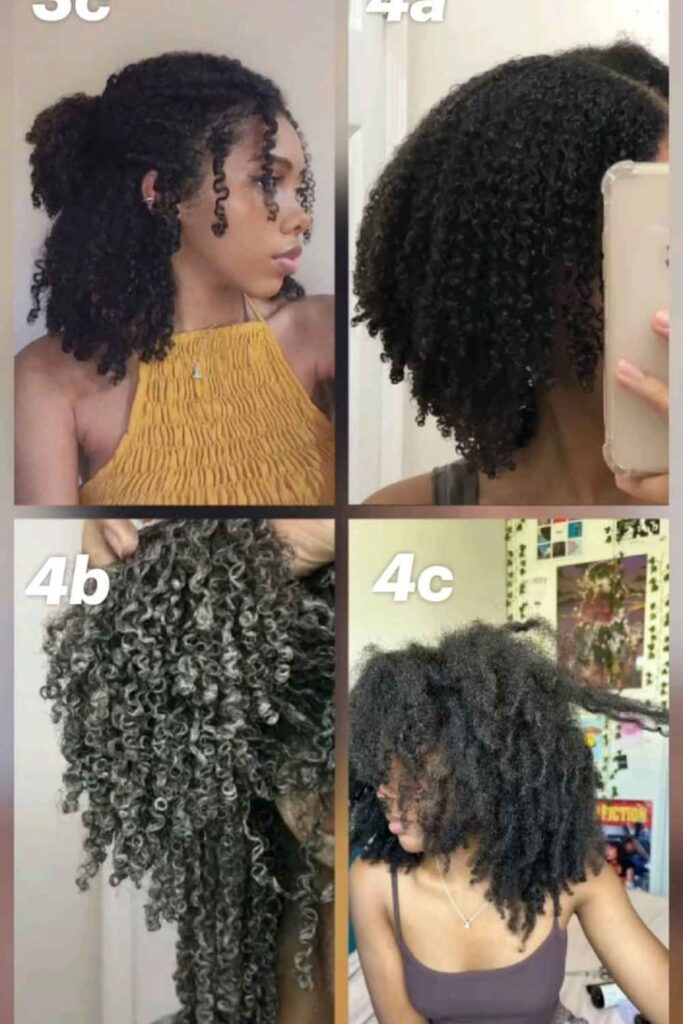
Understanding where 4C hair sits among other curl types helps you stop using advice meant for completely different textures. The hair typing system is genuinely useful when you use it as a starting point for understanding your hair’s needs not as a ranking system or a way to compare your hair to someone else’s.
The biggest practical difference between 4C hair and looser curl types is the moisture demand. As you move from Type 2 (wavy) to Type 3 (curly) to Type 4 (coily), the moisture needs increase dramatically. Curly hair maintenance for a 3A curl looks completely different from coily hair care for a 4C pattern. Products that work beautifully on a looser curl lightweight gels, thin milks will often sit on top of 4C hair without penetrating. This hair needs richer, heavier formulas and more consistent hair routine attention.
Read More About: 20 Best Hair Styles for Women Trendy, Simple & Modern Looks for Every Hair Type
4C Hair vs 4B Hair
4B and 4C hair are neighbors on the typing scale, which means they share a lot of similarities. Both are type 4 hair, both experience significant hair shrinkage and both need intense moisturizing 4c hair level care. The key difference is the curl pattern itself. 4B hair forms a clear Z-shape with somewhat visible coils, while 4C hair has such a tight zig zag curl pattern that individual coils are hard to see with the naked eye. 4B hair also tends to clump more easily, giving it slightly more curl definition without much product.
| Feature | 4B Hair | 4C Hair |
| Curl shape | Z-pattern | Ultra-tight zig-zag |
| Curl definition | Moderate | Minimal without product |
| Shrinkage | 60–70% | 70–75%+ |
| Coil visibility | Visible | Nearly invisible when dry |
| Moisture needs | Very high | Extremely high |
| Best styles | Twist-outs, braid-outs | Stretched styles, puffs |
4C Hair vs 3C Hair
3C hair and 4C hair are two very different worlds. 3C hair forms tight, defined spirals the kind that clump together and show a clear curl pattern right out of the shower. A wash and go style on 3C hair looks effortlessly defined with minimal product. On 4C hair, a wash and go requires specific technique, the right layering of products and often patience to achieve any visible curl definition at all. The hair texture is simply more compact and resistant to clumping.
Curly hair maintenance for 3C hair typically involves lighter products and less manipulation. 4c natural hair needs significantly richer creams, heavier leave in conditioner and more structured wash day routines to achieve similar results. If you have 4C hair and you’ve been following advice designed for 3C curls, that’s likely why your routine isn’t working. Your hair deserves a plan built for its actual needs not a plan borrowed from a lighter curl type.
How to Care for 4C Hair
Caring for 4c hair comes down to three non-negotiables: moisture, gentleness and consistency. Miss any one of those and you’ll find yourself dealing with hair breakage, dry hair and stalled growth. The good news is that once you nail your personal 4c hair routine, it becomes second nature. Most people in the natural hair community describe the same turning point the moment they stopped fighting their hair and started understanding it.
Every successful 4c hair maintenance plan has to account for the hair’s unique structure. The tight coils mean the hair is more fragile at the bends. Detangling hair dry is one of the fastest ways to cause damage. Skipping deep conditioning leads to brittle, snapping strands. And inconsistent moisturizing lets the dry hair cycle restart over and over again. Build your routine around what your 4C hair actually needs not what’s trendy, not what works for your friend’s curl type and you’ll see a dramatic difference within weeks.
Best Wash Routine for 4C Hair
Wash day routine for 4C hair is a whole event and treating it like one makes a real difference. Rushing through it leads to tangles, breakage and frustrated hair that fights back. A proper 4c hair routine wash day starts with a pre-poo treatment. This means applying a rich oil like coconut or olive oil to dry hair 30 minutes to an hour before shampooing. It protects the strands from the stripping effect of shampoo and makes detangling hair dramatically easier after rinsing.
After the pre-poo, divide your hair into four to six sections before shampooing. This keeps the hair from tangling on itself during washing. Use a sulfate-free shampoo and apply it to the scalp, not the length your 4C hair doesn’t need that aggressive cleansing on the strands themselves. Rinse section by section. Then come the most important step: deep conditioning.
Apply a rich deep conditioner for 4c hair and sit under a hooded dryer or wear a heat cap for 20 to 30 minutes. The heat opens the cuticle and allows the conditioning ingredients to penetrate deeply, improving hair elasticity and moisture retention significantly. Finish by sealing with the LOC or LCO method while the hair is still wet and move into your styling routine while everything is fresh and pliable.
How Often Should You Moisturize 4C Hair?
Daily. That’s the honest answer. Most people with 4C hair need to refresh their moisture at least once a day or every other day at minimum. This doesn’t mean re-doing your whole routine. A simple spritz of water mixed with a small amount of leave in conditioner and a light oil is enough to revive your natural curls between full wash day routines. The key is not letting your hair reach bone-dry status, because dry 4C hair is fragile 4C hair.
Seasonal adjustments matter a lot too. Winter air especially in colder parts of the USA like the Midwest and Northeast pulls moisture from coily hair fast. Running indoor heat makes it worse. During winter months, many people with 4C hair add an extra moisturizing session mid-week, switch to heavier creams and butters, and incorporate the greenhouse effect method (applying oil and wearing a plastic cap overnight) to give their 4c hair maintenance a hydration boost. Hair hydration tips that work in July might not cut it in January, so stay flexible with your routine.
Best Oils and Butters for 4C Hair
| Oil or Butter | Key Benefit | Best Used For |
| Jamaican Black Castor Oil | Strengthens strands, supports hair growth | Scalp massages, sealing |
| Shea Butter | Deep sealing, softness | Final step in LOC method |
| Coconut Oil | Penetrates the strand | Pre-poo, protein protection |
| Jojoba Oil | Mimics sebum, balances scalp health | Mixed with leave in conditioner |
| Argan Oil | Lightweight shine and softness | Finishing oil for styles |
| Avocado Oil | Rich in vitamins, great for hair elasticity | Deep conditioning boost |
| Grapeseed Oil | Lightweight, great for low porosity 4c hair | Mid-step in LOC method |
Protective Hair Care Tips for Healthy Growth
Protective styles are one of the most powerful tools in caring for 4c hair but only when they’re done right. The goal of a protective hairstyle for natural hair is to tuck your ends away so they’re not exposed to friction, dry air or constant manipulation. Exposed ends break. Protected ends retain length. That’s the entire logic behind retaining length through protective styling. Box braids, braid styles for 4c hair, wigs and twist hairstyles all qualify but they have to be installed without excessive tension at the root, maintained with moisture underneath and removed gently after six to eight weeks maximum.
Scalp health is just as important as the hair itself, and it’s easy to neglect when your strands are tucked into a protective style. Use a diluted oil or scalp spray to keep your roots nourished between wash days. Don’t assume that because hair is braided, it doesn’t need attention. 4c hair maintenance continues inside every style you wear. A dry, neglected scalp leads to slow hair growth and sometimes inflammation neither of which supports the thriving natural hair you’re working toward.
Best Products for 4C Hair
The 4c hair products market has exploded over the past decade which is both wonderful and overwhelming. Walking down the natural hair aisle at Target or Sally Beauty can feel like a pop quiz. The key is knowing what ingredients your 4C hair actually needs and filtering everything else out. Look for products rich in humectants like glycerin and aloe vera, emollients like shea butter and avocado oil, and proteins like hydrolyzed keratin or silk amino acids for strengthening fragile strands.
Avoid products with drying alcohols high on the ingredient list things like isopropyl alcohol or alcohol denat. These are common in cheaper styling products and they genuinely strip moisture retention from coily hair fast. Also watch out for heavy mineral oils and petrolatum as the first few ingredients, especially if you have low porosity 4c hair. These can coat the strand and block moisture from getting in. The best 4c hair products for your specific hair will depend on your porosity, density and how your hair responds but the categories below are a solid place to start.
Best Shampoo for 4C Hair
Shampooing 4C hair properly makes a massive difference. The wrong shampoo strips natural oils and leaves coily hair feeling like straw before the routine has even started. The right sulfate-free shampoo cleans the scalp effectively without destroying the hair’s moisture balance. Here are three consistently loved picks in the 4c natural hair community:
SheaMoisture Manuka Honey & Mafura Oil Shampoo hydrates while it cleans a rare combination that works beautifully for dry hair prone to hair breakage. As I Am Curl Clarity Shampoo is excellent for removing buildup without stripping, which makes it perfect for people who use heavy creams and butters in their curl care routine. Camille Rose Moroccan Pear Conditioning Shampoo is a cult favorite for its gentle formula and incredible slip, which makes the detangling hair process during washing so much easier.
Use a clarifying shampoo once a month to remove product buildup that regular sulfate-free formulas miss. Product buildup blocks moisture from reaching your strands and no matter how great your 4c hair routine is, buildup will undermine all of it.
Best Leave-In Conditioner for 4C Hair
A great leave in conditioner is the foundation of moisturizing 4c hair properly. It’s the first product that hits your freshly washed, damp strands and it sets the tone for everything layered on top. You want something with enough slip to make detangling hair easier, enough moisture to start the hydration process and enough weight to coat those tight zig zag curls without sitting on top of them.
Kinky Curly Knot Today has been a staple in the natural hair community for years its slip is unmatched and it works across all porosity types. TGIN Butter Cream Daily Moisturizer is thicker and richer, making it ideal for very dry or high porosity 4C hair. Mielle Organics Pomegranate & Honey Leave-In Conditioner delivers protein and moisture together, which is perfect for hair that’s dealing with both dryness and hair breakage.
Apply your leave in conditioner on soaking wet hair for maximum penetration. The water on your hair acts as a vehicle for the conditioner to travel deeper into the strand. Squish it in rather than raking it through scrunching and squishing techniques help the product bond to your natural curls instead of just sitting on the surface.
Best Deep Conditioners for Dry 4C Hair
Deep conditioning is the single most impactful step in any 4c hair routine and skipping it consistently is one of the fastest ways to end up with brittle, broken strands. Deep conditioner for 4c hair falls into two categories: moisture treatments and protein treatments.
Moisture deep conditioners replenish hair hydration and improve softness and hair elasticity. Protein treatments rebuild damaged areas of the hair shaft and strengthen the strand against future hair breakage. Most 4C hair needs moisture conditioning weekly or bi-weekly and protein treatments once a month or less over-proteinizing causes its own kind of brittleness, so balance matters.
Briogeo Don’t Despair, Repair! Deep Conditioning Mask is a powerhouse for damaged, over-processed 4C hair it balances protein and moisture brilliantly. Aussie 3 Minute Miracle is the beloved budget-friendly pick that’s been a community favorite for over a decade incredibly effective for curly hair maintenance on a tight budget. Mielle Babassu Oil & Mint Deep Conditioner is rich enough for the driest coily hair while still leaving strands feeling soft rather than overloaded.
Always apply your deep conditioner with heat either a hooded dryer, heat cap or even a warm towel wrapped around your head. The heat lifts the cuticle and lets those nourishing ingredients actually get inside the strand rather than just coating it.
4C Hairstyles for Every Occasion
One of the biggest myths about 4C hair is that it’s limited in terms of style options. The reality is the complete opposite. 4c natural hair is one of the most versatile textures in existence. It can be stretched, twisted, braided, picked out, flat ironed (with proper heat protection), coiled and sculpted into an almost unlimited range of looks. The best hairstyles for 4c hair work with the hair’s natural behavior its volume, its texture and yes, even its shrinkage rather than trying to force it into something it’s not.
4c hair maintenance through stylish choices is absolutely possible. Many of the most popular protective hairstyles for natural hair are also low-effort, which means you can look great and protect your hair at the same time. The sweet spot is finding low manipulation hairstyles that you genuinely love wearing because the less you touch your 4C hair, the more it thrives. Less daily manipulation means less hair breakage, better moisture retention and more retaining length over time.
Easy 4C Hairstyles for Beginners
Starting your natural hair journey can feel intimidating especially when your social media feed is full of perfectly defined twist out styles and elaborate braid styles for 4c hair that look like they took hours. The truth is, the most beginner-friendly styles for 4C hair are also some of the most beautiful.
The high puff is the entry-level move every 4c natural hair beginner should master. Gather your hair at the crown, secure it loosely with a soft scrunchie or satin-covered band and let the volume do the talking. It takes five minutes and looks stunning.
Flat twists are another excellent starting point. Part your hair into sections, apply a cream or leave in conditioner, and twist two sections of hair flat against the scalp. You can wear flat twists as a style themselves or unravel them the next morning for a stretched, defined look.
Bantu knots are similarly approachable twist small sections into tight spirals and pin them flat against the head. Wear them as a protective style during the day and unravel them for bantu knot-out curls. The key for any beginner 4c hair routine styling session is to work on freshly washed, well-conditioned, still-damp hair. Trying to style dry 4C hair is a recipe for frustration and hair breakage.
Protective Hairstyles for 4C Hair
Protective hairstyles for natural hair are the backbone of length retention for 4C hair. Box braids are probably the most iconic and for good reason. They keep the ends tucked, require minimal daily curl care and can last four to six weeks with proper maintenance. Knotless box braids are a newer variation that puts significantly less tension on the scalp and hairline, making them a smarter choice for long-term scalp health and preventing breakage at the edges.
Senegalese twists, cornrows and wigs are equally powerful protective styles for 4C hair. Wigs deserve a special mention a well-fitted wig with a satin-lined interior protects your 4c natural hair completely while giving you the freedom to change your look daily without touching your real hair at all. Just make sure to keep your hair moisturized underneath, cleanse your scalp regularly and give your hair rest periods between installs. Protective styling only works for hair growth when the hair underneath is being cared for. Neglect under a braid style and you’ll take it down to find dry, tangled, broken strands the opposite of what you were going for.
Short 4C Hairstyles
Short 4C hair especially the iconic TWA (Teeny Weeny Afro) is absolutely magnetic. There’s a confidence that comes with short 4c natural hair that long hair simply can’t replicate. A well-shaped TWA frames the face beautifully and requires the least amount of daily 4c hair maintenance of any style. Moisturize it daily, keep the scalp clean and healthy and let your coily hair do its thing. Some people add finger coils to short 4C hair for more definition using a small amount of gel or cream, twirl individual sections around your finger and release. The result is a more defined, sculptural version of your natural curl pattern.
Mini twists on short 4C hair are another crowd-pleaser. They create a full, textured look that lasts one to two weeks with proper overnight hair protection using a satin bonnet. Bantu knots also look incredible on shorter 4C hair the tighter the knots, the better they work with the natural hair texture. Don’t let anyone convince you that short 4C hair is limiting. Some of the most striking natural hair looks in the USA are TWAs and short afro styles that celebrate the full, dense glory of afro textured hair.
Natural Hairstyles for Type 4C Hair
Natural hairstyles for type 4C hair range from effortless everyday looks to elaborate, head-turning styles. The twist out is probably the most universally loved apply a cream product on damp hair, twist two-strand sections throughout the entire head, allow to dry fully (preferably overnight), then unravel gently for a stretched, defined, voluminous look. The braid out works on the same principle but gives a slightly different texture and more elongation. Both are foundational curly hair maintenance techniques every 4C hair person should have in their toolkit.
The wash and go is the most debated style in the 4C hair community. Some people swear by it, others say their 4C hair just doesn’t cooperate. Here’s the truth: wash and go styles on 4C hair work best when you apply generous amounts of a defining cream or gel to very wet, freshly conditioned hair and let it air dry completely without touching it. The technique is called the “praying hands” method smooth product through sections rather than scrunching, which can disturb the natural curls and cause frizz. The result won’t look like a 3C hair wash and go it’ll look like yours, full and textured and uniquely 4C.
The Best Haircuts for 4C Hair
The right haircut transforms 4C hair from a shape you’re managing to a shape you’re celebrating. Most people don’t realize how much a good cut changes the game for coily hair care until they experience it firsthand. The wrong cut leaves 4C hair looking shapeless or uneven. The right cut enhances volume where you want it, removes weight where you don’t and creates a silhouette that works with the hair’s natural curl pattern rather than against it. Finding a stylist who specializes in afro textured hair is genuinely worth seeking out not every stylist knows how to cut 4C hair for its natural state.
Trimming natural hair regularly is part of haircut maintenance that too many people skip. Split ends don’t just stop at the split they travel up the shaft, causing progressive hair breakage that undoes months of careful 4c hair maintenance. Trim every eight to twelve weeks, or whenever you notice rough, tangled ends that don’t respond to conditioning. You don’t need to trim a lot each time even a tiny dusting of the ends removes damage and keeps the hair feeling healthy and fresh.
Tapered Cuts for 4C Hair
The tapered cut is one of the most flattering haircuts for 4C hair and it has been having a serious moment in the USA natural hair community. The style features shorter hair at the sides and back with a fuller, rounder top creating a striking shape that highlights the natural volume of afro textured hair.
Tapered cuts work on both short and medium-length 4C hair and they’re endlessly customizable. A low fade with a full natural top looks sleek and modern. A soft taper with a rounded afro looks classic and sculptural. Either way, the shape does the heavy lifting and the coily hair care routine keeps it looking fresh between cuts.
The real beauty of a tapered cut for 4C hair is how it reduces the weight at the bottom of the hair. Dense 4C hair can feel very heavy and compact when it’s all one length a taper removes that weight strategically and lets the hair at the crown express its full volume. It also tends to make daily 4c hair maintenance easier since there’s less hair overall and the shape holds even on days when you haven’t spent much time styling.
Afro Styles for 4C Hair
The afro is the original celebration of 4C hair and it never goes out of style. A full, rounded afro shaped with a pick is a powerful, beautiful statement that works for everything from casual days to formal events. Afro styles for 4C hair range from the classic round pick-out afro to the high afro puff to the asymmetrical shaped afro with a side part. Each variation shows off the natural hair density and volume that makes 4C hair so visually striking. The key to a great afro style is starting with well-moisturized, detangled natural hair and using a wide-tooth pick to gently lift and shape always working from the ends toward the roots to avoid causing hair breakage.
Afro hair thrives with consistent curl care between styling sessions. Refresh daily with a water spritz and light oil, pineapple at night and fluff gently in the morning. Sleeping with a satin bonnet or on a silk pillowcase keeps the shape intact and prevents the frizz and flatness that cotton causes. An afro that’s properly maintained between wash days looks fresh for a full week and sometimes longer.
Low-Maintenance Haircuts for 4C Hair
Low-maintenance doesn’t mean no-maintenance it means building a cut that requires less daily intervention to look great. The TWA is the ultimate low-maintenance cut for 4C hair. Short enough that detangling hair takes minutes, full enough that 4C hair‘s natural volume shines through.
A blunt cut on medium-length 4c natural hair is another excellent option it gives the hair a clean, defined perimeter that looks intentional even on the days when you’ve done very little to it. Layered cuts are popular too, especially for people with very dense 4C hair layers remove bulk and add movement without removing significant length.
No matter which cut you choose, commit to regular trimming natural hair appointments. Even the lowest-maintenance cut needs fresh ends to look its best. And again find a stylist who genuinely understands afro textured hair. Ask to see their work on natural 4C hair before sitting in the chair. A great 4C hair cut in skilled hands is a genuine investment in your natural hair journey.
How to Grow 4C Hair Faster
Here’s the truth about hair growth and 4C hair: your hair is already growing. The average scalp grows about half an inch of hair per month that’s the same for straight hair, wavy hair, curly hair and 4C hair alike. The issue almost never is how fast the hair is growing.
The issue is retaining length keeping the hair that’s already grown long enough to show. Every inch that breaks off at the ends is an inch you grew but never got to keep. 4c hair maintenance focused on length retention is the real secret to growing 4C hair longer.
Hair growth support from the inside matters too. A diet rich in biotin, zinc, iron and vitamins D and E supports the hair follicle from within. Staying well-hydrated affects hair hydration at every level including at the follicle where the hair is actually produced. Scalp health is directly connected to growth rate as well. A clean, stimulated scalp with good circulation grows hair faster than a clogged, inflamed one. Regular scalp massages with Jamaican Black Castor Oil have been a go-to in the 4c natural hair community for years and the anecdotal evidence is hard to argue with.
Daily Habits That Damage 4C Hair
The most damaging habits for 4C hair are often the most routine ones. Skipping your moisturizer because you’re in a rush. Rubbing your hair dry with a cotton towel. Wearing your hair in a tight ponytail with a rubber band every single day. These small daily choices compound over weeks and months into significant hair breakage and stalled growth.
Switching to a microfiber towel or a soft T-shirt for drying makes an immediate difference. Replacing rubber bands with soft, seamless scrunchies protects your edges. And keeping a simple leave in conditioner on your nightstand makes daily moisturizing easy enough that you’ll actually do it.
Sleeping on a cotton pillowcase is another underrated damage source. Cotton absorbs moisture from your 4C hair aggressively while you sleep and creates friction that causes frizz and hair breakage. Switching to a silk pillowcase or wearing a satin bonnet every night is one of the highest-ROI changes you can make for 4c hair maintenance it’s inexpensive, effortless and the difference is noticeable within days. Overnight hair protection is not optional for 4C hair that wants to retain length. It’s just part of the routine.
Does Protective Styling Help 4C Hair Grow?
Protective styles don’t make your hair grow faster but they absolutely help you grow longer hair. The distinction matters. Hair growth happens at the scalp regardless of what you’re wearing. What protective styling does is shield your fragile ends from daily manipulation, friction and environmental dryness.
Tucked-away ends are ends that survive long enough to show up as visible length. That’s retaining length in action and it’s why so many people in the 4c natural hair community swear by protective hairstyles for natural hair as their primary growth strategy.
The research on protective styles and length retention is pretty consistent. A 2019 survey of over 3,000 Black women conducted by the Natural Hair Survey found that regular protective styling was one of the top shared habits among participants who reported retaining four or more inches of length per year. The rule is simple: protect the ends, moisture the hair underneath, don’t leave the style in too long and your 4C hair will show you the length it’s been growing all along.
Nighttime Routine for 4C Hair Growth
Your nighttime hair routine is where a lot of the real 4c hair maintenance magic happens or where damage quietly accumulates if you skip it. The pineapple method works for medium to long 4C hair: gather all your hair loosely at the very top of your head and secure it with a soft, seamless scrunchie.
This keeps the length gathered and protected without flattening the roots or creating creases. In the morning, remove the scrunchie and fluff gently for a refreshed style without needing to re-do everything from scratch.
Always cover your hair before sleeping either with a satin bonnet, a silk scarf or by sleeping on a silk pillowcase. If your bonnet tends to fall off during sleep (a very common complaint), try a satin-lined sleep cap that ties under the chin, or invest in a satin pillowcase as your backup protection.
Spritz lightly with water and a small amount of oil if your 4C hair feels dry before bed this small act of hair hydration overnight makes a notable difference in how your hair feels by morning. Consistent overnight hair protection is one of the simplest, most effective hair hydration tips for anyone on a serious natural hair journey.
Common 4C Hair Problems and Solutions
Every single person with 4C hair has hit a wall at some point. The breakage that won’t stop. The tangles that feel impossible. The dry hair that no product seems to fix. These are real, common challenges and each one has a real solution. 4c hair maintenance isn’t about achieving perfect hair. It’s about understanding what your hair is telling you and responding with the right tools.
The most important mindset shift in caring for 4c hair through problems is this: your hair is not broken. It’s communicating. Excessive hair breakage is communication usually about moisture imbalance or protein deficiency. Persistent dry hair despite heavy moisturizing is communication usually about hair porosity or product layering issues. Constant tangling is communication often about damaged ends or inconsistent detangling hair practices. Once you start reading the signals instead of just reacting with frustration, 4c hair maintenance becomes genuinely enjoyable.
How to Prevent Breakage in 4C Hair
Preventing breakage in 4C hair starts with moisture but it doesn’t end there. Balance between protein and moisture is critical. Too little protein leaves hair weak and mushy, breaking under minimal tension. Too much protein makes hair stiff and brittle, snapping at the slightest manipulation. The sweet spot for most 4C hair is a moisture-heavy routine with a targeted protein treatment once a month or so. If your hair feels gummy when wet or stretches way too much before breaking, it needs protein. If it feels dry and snaps immediately with no stretch, it needs moisture.
Always detangle 4C hair on wet, conditioned strands never dry. Start from the ends and work your way up to the roots in small sections. Use your fingers first to remove large knots, then follow with a wide-tooth comb or a detangling brush like the Felicia Leatherwood Detangler.
Be patient. Rushing through detangling hair on 4C hair causes more hair breakage in ten minutes than two weeks of skipped moisturizing. Trim regularly, avoid tight styles that pull on the hairline and skip the rubber bands entirely. These aren’t complicated changes but together they dramatically reduce hair breakage and support genuine retaining length over time.
How to Keep 4C Hair Moisturized in Winter
Winter is the sworn enemy of 4C hair moisture. Cold outdoor air has extremely low humidity, which pulls moisture from coily hair relentlessly. Indoor heating makes it worse forced air heat is incredibly drying for both skin and 4C hair. Most people find their 4c hair routine needs a significant upgrade between October and March to maintain the same moisture retention levels they achieved effortlessly in summer.
The greenhouse effect is a game-changer for winter 4c hair maintenance. Apply a generous amount of oil or butter to your hair at night, cover with a plastic cap under your satin bonnet and let the warmth from your scalp work as a natural heat source overnight.
By morning, the oil has deeply penetrated the strand and moisture retention improves dramatically. Using a humidifier in your bedroom during winter months is another underrated hair hydration tip it puts moisture back into the air and your 4C hair benefits passively while you sleep. Heavier products, more frequent refreshes and the greenhouse method together can keep 4C hair thriving even through the harshest USA winters.
Fixing Tangled and Matted 4C Hair
Severely tangled or matted 4C hair is stressful but it’s fixable. The golden rule is patience. Never, ever pull through a mat with a comb. That breaks hundreds of strands at once and turns a fixable problem into a much more serious one. Start by completely saturating the tangled section with a rich leave in conditioner or a dedicated detangling product. Allow it to sit for five to ten minutes so the slip can start loosening the knot. Then work with your fingers gently, from the very bottom of the tangle, separating strands one at a time and working upward slowly.
For extremely matted 4C hair that won’t budge with conditioner alone, try adding coconut oil on top of the conditioner for extra slip. Work in very small sections and give yourself plenty of time rushing causes hair breakage. If the mat is truly severe and you’ve been at it for twenty minutes without progress, this is a situation where visiting a professional natural hair stylist is the smartest move. Some tangles need professional hands to resolve without causing significant hair breakage. There’s no shame in getting help protecting your 4C hair is always the priority over pride.
Myths About 4C Hair
The amount of misinformation floating around about 4C hair in the USA is genuinely staggering. Some of it comes from people who just don’t understand afro textured hair. Some of it comes from a beauty industry that spent decades ignoring type 4 hair entirely. And some of it, unfortunately, comes from within the natural hair community itself internalized ideas about which curl types are “better” or “easier.” Let’s put the biggest myths to rest once and for all.
4c natural hair is not a problem to be solved. It’s not unmanageable, unkempt or unprofessional. It’s not less beautiful than looser curly hair types. It doesn’t need to be straightened to be taken seriously. These are myths built on bias, not on any truth about the actual nature of 4C hair. The natural hair journey for someone with 4C hair is a process of unlearning those myths as much as it is a process of learning new techniques. Both matter.
Is 4C Hair Hard to Manage?
4C hair is not hard to manage it’s just different from what most mainstream hair care advice was built for. For decades, the beauty industry designed products, tools and tutorials for straight or loosely wavy hair. Everything from drugstore shampoos to salon techniques was built for a different hair texture. When 4C hair doesn’t respond to those products and techniques, it looks like the hair is being “difficult.” But the hair isn’t being difficult. The tools were just wrong for the job.
Once you have the right products, the right techniques and a consistent 4c hair routine, managing tight curls becomes genuinely straightforward. Most experienced 4c natural hair people describe their routine as simple a focused wash day every one to two weeks, daily moisturizing that takes two minutes and overnight hair protection every night. That’s not complicated. It’s consistent. And consistency, more than any single product or technique, is what makes 4C hair thrive.
Can 4C Hair Grow Long?
Absolutely yes. 4C hair can and does grow long sometimes dramatically long. YouTubers like Naptural85 and TheChicNatural have documented years of 4C hair growth journeys that resulted in waist-length and beyond natural hair all without straightening, all while celebrating the full coily hair texture. The idea that 4C hair can’t grow long is one of the most persistent and most damaging myths in the community because it causes people to give up on length goals before they’ve even tried.
The challenge with 4C hair length is visual because of hair shrinkage, the hair always appears shorter than it actually is. Someone with ten inches of 4C hair might appear to have four or five when their hair is at its natural, dry, contracted state. Stretch the same hair with a blow dryer on low heat or a stretching technique and those ten inches appear. Retaining length through protective styles, consistent moisture, gentle handling and regular trimming natural hair is the formula. It’s not magic and it’s not luck it’s intentional 4c hair maintenance over time.
FAQ’s
What does 4C hair look like?
4C hair is the tightest curl pattern, forming a dense zigzag or coil shape with little to no visible curl definition. It shrinks up to 75% of its actual length and appears very full and voluminous.
What products work best for 4C hair?
Best products for 4C hair include heavy moisturizers like shea butter, castor oil, and leave-in conditioners. Curl creams, hair butters, and glycerin-based products help retain moisture, which 4C hair desperately needs due to its tight coils making it prone to dryness.
How do you sleep with 4C hair?
For sleeping, protect 4C hair by wearing a satin or silk bonnet, using a satin pillowcase, or doing a “pineapple” (loosely gathering hair on top of the head with a scrunchie) to preserve moisture, reduce breakage, and maintain style overnight.
Conclusion
4C hair is not a problem to manage it’s a crown to understand. Everything covered in this guide comes back to three core principles: moisture, gentleness and consistency. Keep your coily hair hydrated daily. Handle it with care every time you touch it. Show up for your 4c hair routine without skipping the important steps. Do those three things and your 4c natural hair will respond. Not overnight but over weeks and months, the difference in strength, length and health becomes undeniable.
Your natural hair journey is uniquely yours. Maybe you’re just cutting off your relaxer and starting fresh. Maybe you’ve been caring for 4c hair for years and just needed a deeper understanding of the science behind what works. Either way, the most important step is the next one picking one thing from this guide and applying it to your 4c hair maintenance routine today.
Start with the nighttime hair routine. Switch to a satin bonnet. Add a proper deep conditioning step on your next wash day. Build from there. Your healthy natural hair is already growing now it’s time to give it the care it deserves to truly thrive.


